
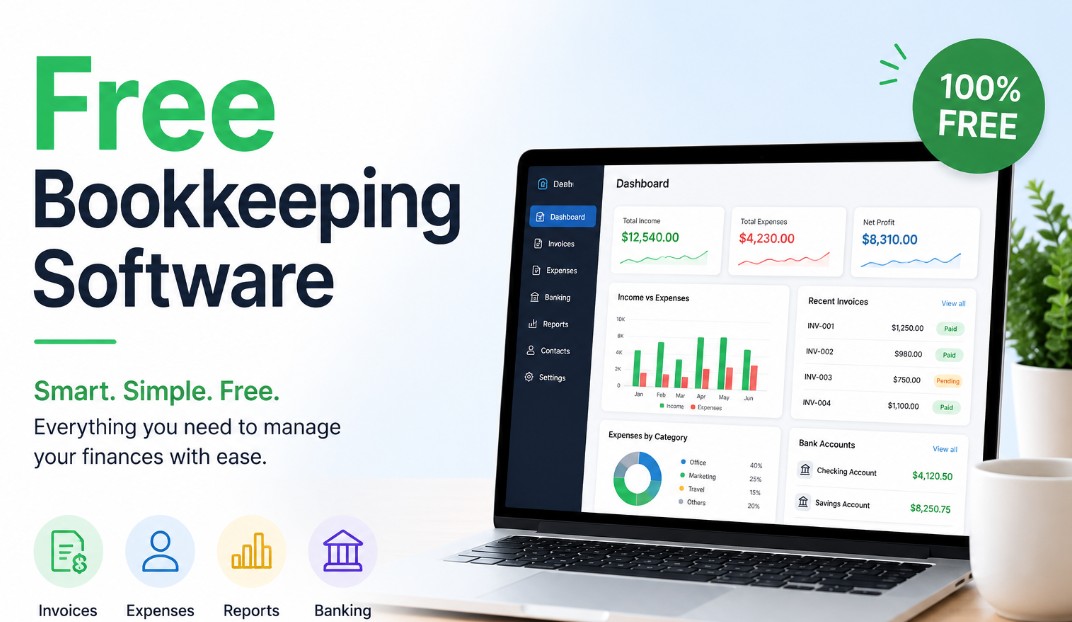
Operating costs for small businesses, freelancers, and sole traders across the United Kingdom face continuous pressure from inflation and shifting regulatory structures. Finding reliable free bookkeeping software can significantly reduce overheads.
However, selecting a platform that satisfies internal financial workflows while keeping your business fully compliant with HM Revenue and Customs (HMRC) can be challenging.
Many platforms market themselves as zero-cost options, yet include hidden volume caps, transaction ceilings, or paywalls for mandatory regulatory compliance modules. According to official HMRC guidance, any enterprise with a taxable turnover exceeding the current £90,000 VAT registration threshold must maintain digital records.
Top 10 best free bookkeeping software options in the UK?
The best free bookkeeping software tools in the UK are FreeAgent (best for specific bank account holders), Zoho Books (best for small revenue startups), QuickFile (best for higher-value low-volume trades), Sage Sole Trader (best for single landlords), Clear Books, Wave, Invoice24, Akaunting, Manager.io, and VT Cash Book.
FreeAgent
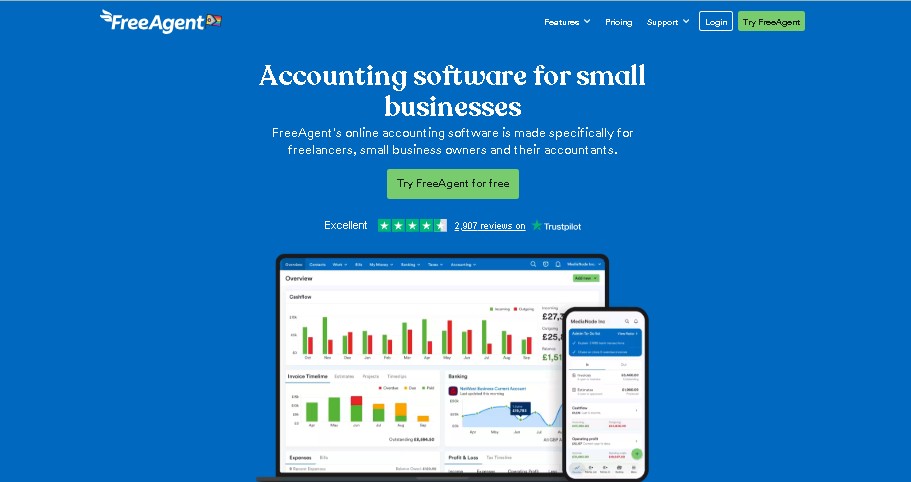
FreeAgent offers arguably the most comprehensive and unrestricted accounting experience in the UK, provided you connect it to a qualifying business bank account. It is fully featured with no cut-down modules or hidden data restrictions.
- Key Information: Offers automated bank feeds, unrestricted sales invoicing, multi-currency processing, and native tax forecasting.
- Best For: Active sole traders and limited companies seeking premium software features without a monthly subscription.
- Free Time Period: Permanently free as long as your linked business bank account remains active.
- Price After Free Period: Retails up to £36/month plus VAT if the bank account is closed or eligibility ends.
Zoho Books
Zoho Books provides a highly polished, cloud-native engine specifically engineered for early-stage micro-enterprises. It allows users to track end-to-end profitability on a beautifully designed dashboard.
- Key Information: Supports 1 primary user + 1 external accountant. Includes automated bank feeds via TrueLayer and client quote generation.
- Best For: Low-volume freelancers and new startups looking for clean, structural ledger management.
- Free Time Period: Permanently free for businesses under the financial cap.
- Price After Free Period: Upgrades to the paid Standard tier start at £10/month (billed annually) once revenue limits are breached.
QuickFile
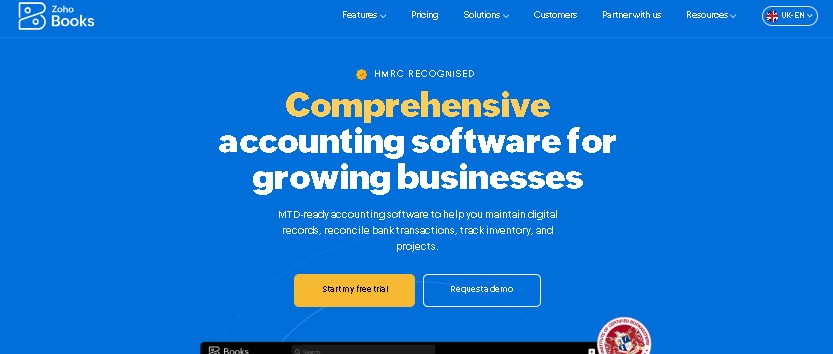
QuickFile operates on a transparent data density model designed to handle basic double-entry accounting without forcing immediate software expenditures.
- Key Information: Includes automated Open Banking reconciliation, customizable sales portals, receipt capturing via mobile app, and multi-currency ledgers.
- Best For: Small business entities processing higher-value, lower-volume transactions.
- Free Time Period: Permanently free until your ledger capacity reaches its cap.
- Price After Free Period: Requires an upgrade to their low-cost Premium tier at £36 plus VAT per year.
Sage
Sage addresses newly registered operators who require professional compliance tracking and a structured ledger footprint without immediate overheads.
- Key Information: Connects a single UK bank account and auto-categorises incoming/outgoing transactions. Generates a native SA103S Income Tax Self Assessment summary.
- Best For: Low-volume independent contractors and single-property landlords.
- Free Time Period: Permanently free for the basic feature configuration.
- Price After Free Period: Advanced tiers with unlimited invoicing and AI-assisted receipt scanning start at £7/month plus VAT.
Clear Bookkeeping
Clear Books delivers a highly focused, HMRC-approved free tool crafted explicitly to alleviate the administrative burdens of self-employed UK residents facing modern digital updates.
- Key Information: Provides quick data logging, real-time profit and loss tracking, and basic mobile categorisation.
- Best For: Sole traders and landlords prioritising straightforward, non-VAT tax filing routines.
- Free Time Period: Permanently free for the core sole trader module.
- Price After Free Period: Upgrades to expanded business formats scale from £5/month plus VAT.
Wave Accounting
Wave remains a popular cloud choice for micro-businesses looking for baseline tracking without strict interface gates.
- Key Information: Offers unlimited invoicing, simple receipt scanning, and basic financial reporting (P&L and balance sheets).
- Best For: Early-stage freelancers with basic bookkeeping structures who do not require direct UK tax office submission pipelines.
- Free Time Period: Permanently free for the bookkeeping module.
- Price After Free Period: The bookkeeping features remain free; Wave monetises via optional payment processing fees and optional paid payroll additions.
Invoice24
Invoice24 focuses heavily on the immediate financial health of independent businesses by prioritising efficient client billing linked directly to underlying accounting ledgers.
- Key Information: Features professional invoice generation, quote management, and clear profit dashboards designed to meet digital tax expectations.
- Best For: Modern contractors looking to manage cash flow and clean records in one intuitive interface.
- Free Time Period: Permanently free for core record-keeping and invoicing functions.
- Price After Free Period: Scaled tiers for multi-user access or intricate multi-entity tracking apply custom subscription fees.
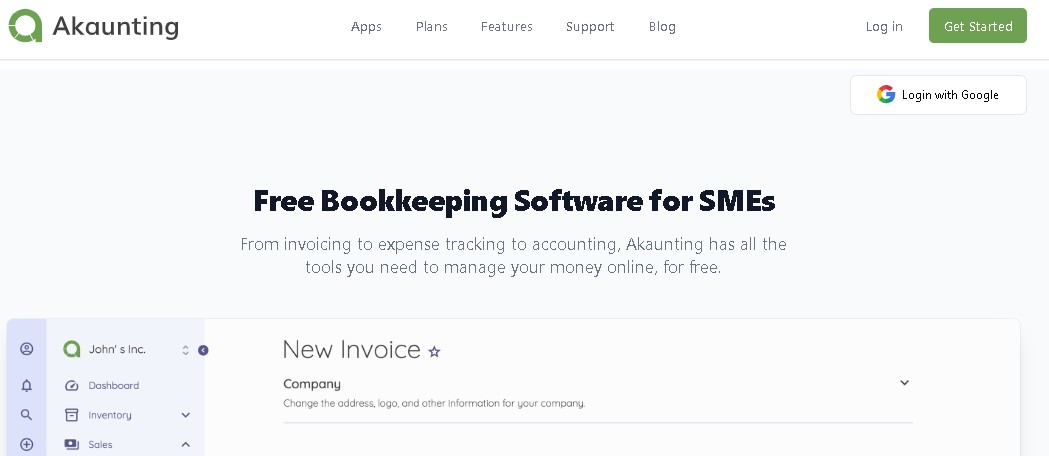
Akaunting Open-Source Platform
Akaunting offers a completely self-hosted alternative for small business owners concerned with complete data privacy and architectural control.
- Key Information: The core engine must be installed on your independent server. Manages unlimited invoices, vendor trackers, and basic reporting out of the box.
- Best For: Tech-savvy entrepreneurs or privacy-centric enterprises with internal hosting capabilities.
- Free Time Period: Core software framework is permanently free to download and use.
- Price After Free Period: The software itself is free, but automated open banking feeds and advanced compliance modules must be purchased individually as extensions from their app store.
Manager.io
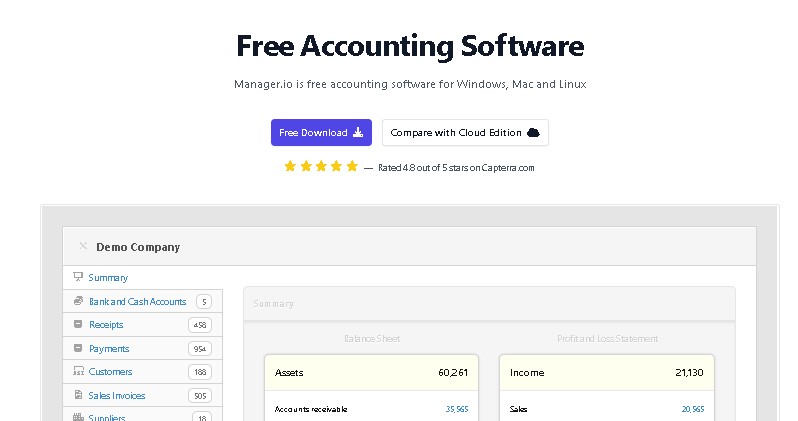
Manager.io provides a robust, fully featured offline accounting tool for those who prefer keeping their accounting data away from third-party cloud environments.
- Key Information: The downloadable desktop variant is completely unrestricted. It features full double-entry ledgers, comprehensive reporting, and inventory management.
- Best For: Brick-and-mortar sole traders or small operators who do not require collaborative cloud access.
- Free Time Period: Permanently free for the single-user local desktop application.
- Price After Free Period: Desktop version stays free; cloud-hosted and multi-user cross-network versions carry subscription fees.
VT Cash Book
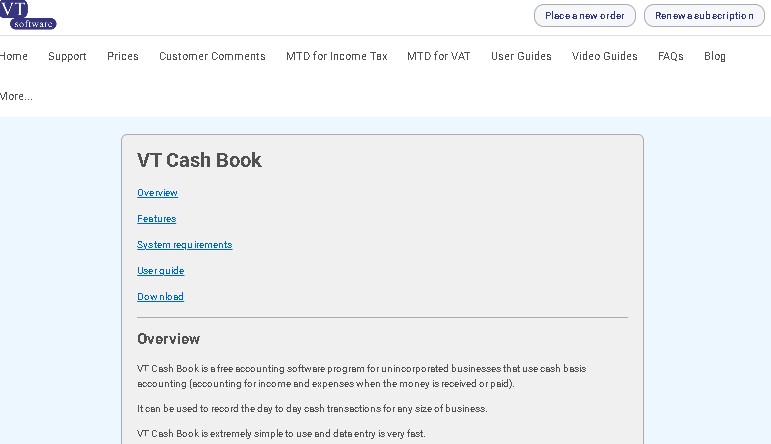
VT Cash Book is a minimalist, ultra-lightweight application focusing on structural simplicity and hyper-fast transaction logging.
- Key Information: Operates locally to record income and expenses as they occur. Generates basic cash books, ledger activity sheets, and profit-and-loss readouts.
- Best For: Micro-sole traders wanting a digital ledger without the complexity of modern cloud navigation.
- Free Time Period: Permanently free local software download.
- Price After Free Period: Stays free for basic logging; advanced Excel-integrated extensions (VT Transaction+) require a paid license.
How do free accounting tools compare for limited companies vs sole traders?
The table below outlines how the leading free bookkeeping tools compare across core functional limits, automated data pipelines, and target operational structures.
| Free Software Engine | For Limited Companies | For Sole Traders | Free Tier Limit / Pricing Catch |
| FreeAgent | Excellent: Fully handles Corporation Tax, generates balance sheets, and tracks director payroll. | Excellent: Full automated tax forecasting and native MTD filing pipelines. | Bank-Tethered: Permanently free only if your linked Mettle, NatWest, or RBS account stays active. |
| Zoho Books | Poor: Locks out key multi-currency tools, payroll paths, and complex corporate reporting. | Excellent: Built-in TrueLayer bank feeds and slick invoice automation on the dashboard. | Turnover-Capped: Hard-stopped if your gross annual revenue breaches £35k/year. |
| QuickFile | Fair: Supports strict double-entry architecture for low-volume, high-value firms. | Good: Mobile receipt capture app and customised portals to invoice clients. | Volume-Restricted: Cuts off free access once your ledger hits 1,000 lines per rolling year. |
| Sage | ✗ Not Supported: Missing corporate tax, dividend, and equity frameworks. | Good: Connects one bank feed and auto-generates your SA103S Self Assessment summary. | Feature-Gated: Free for the basic layout; advanced invoicing upgrades start at £7/month. |
| Clear Books | ✗ Not Supported: Built explicitly to bypass corporate complexity for single owners. | Excellent: Fast data logging and real-time profit tracking for basic tax routines. | Module-Gated: Permanently free specifically for the core, non-VAT sole trader/landlord module. |
| Wave Accounting | Basic Only: Can record tracking ledgers, but lacks any direct UK corporate tax filing ties. | Good: Totally unlimited sales invoicing customisation and built-in receipt parsing. | Automation Catch: Bookkeeping stays free, but automated UK bank feeds are restricted. |
| Invoice24 | Poor: Missing full balance sheets and the complex nominal ledgers needed for companies. | Fair: High-quality dashboard prioritising client billing, quotes, and immediate cash flow. | Scale-Gated: Multi-user networking or advanced multi-entity tracking triggers custom subscription fees. |
| Akaunting | Fair: Requires manual modular scaling to support corporate double-entry frameworks. | Fair: Ideal for privacy-focused owners who want complete data hosting control. | App Store Model: Engine is free to host, but Open Banking feeds and UK tax apps are paid extras. |
| Manager.io | Basic Only: Handles local double-entry records, but lacks integrated HMRC cloud pipelines. | Good: Fully unrestricted offline setup featuring inventory management tools. | Cloud-Gated: Local desktop version is 100% free; collaborative cloud hosting requires a subscription. |
| VT Cash Book | Poor: Minimalist framework can handle basic cash books but fails at company accounts. | Good: Lightweight, ultra-fast transaction logging for traditional offline record-keeping. | Extension-Gated: Software download is permanently free; Excel integration layouts require a paid license. |
While a turnover-capped cloud plan might fit a freelance graphic designer perfectly, an incorporated e-commerce business processing hundreds of low-value international transactions will rapidly exhaust a volume-restricted ledger, triggering unexpected operational overheads. Choosing the right free accounting software early on prevents these costly mid-year transitions.
Furthermore, those seeking personal financial tracking rather than commercial ledgers should opt for a dedicated free personal accounting software UK app; deploying commercial business software for domestic household budgeting adds unnecessary structural complexity.
Is free software fully compatible with HMRC and Making Tax Digital?
Free software can be fully compatible with Making Tax Digital (MTD), but you must verify that the provider’s specific zero-cost tier opens the official HMRC digital API transmission gateway without forcing a paid premium upgrade.
To guarantee that a zero-cost bookkeeping tool is fully compliant with modern UK tax law, business operators must execute the following authentication and setup process:
- Confirm your current corporate reporting status, assessing whether your business sits above or below the mandatory £90,000 VAT registration threshold.
- Navigate to the official GOV.UK digital directory of HMRC-recognised software providers to verify the tool’s platform status.
- Check that the free software tier explicitly includes the Making Tax Digital API transmission module without requiring a paid subscription upgrade.
- Establish a secure digital link between your chosen bookkeeping platform and your business bank account using an Open Banking API.
- Log into your business tax account via the HMRC Government Gateway portal.
- Select the software authorisation section within the Gateway environment to grant your specific accounting application transmission permissions.
- Perform a test connection run to confirm the secure, encrypted delivery of digital records ahead of your official quarterly filing deadline.
Can you use alternative tools like Xero, QuickBooks, or ChatGPT for free?
No, Xero and QuickBooks do not provide permanently free tiers in the UK market, while AI models like ChatGPT cannot legalistically serve as compliant bookkeeping tools because they lack standard double-entry architecture and direct HMRC digital filing links.
Xero UK
Xero does not offer a permanently free operational tier in the UK market. It runs on a traditional subscription model, limiting zero-cost access to standard 30-day trial setups or temporary introductory discount windows.
Xero is highly favoured by chartered accountants for its granular nominal ledger controls, complex multi-entity reporting, and deep ecosystem of app integrations.
Intuit QuickBooks UK
Like its main competitor, QuickBooks UK provides no free lifetime plan. Instead, it leverages month-long trial environments to let users explore its system.
QuickBooks generally targets independent operators who prefer mobile receipt capture, mileage tracking, and intuitive user interfaces.
ChatGPT / Generative AI
Generative AI tools lack standard double-entry architectural backbones, cannot connect to live UK Open Banking data streams, and are prone to calculation errors, making them a major HMRC compliance risk.
While large language models can draft invoice templates or spreadsheet formulas, they cannot function as compliant bookkeeping systems.
They lack financial architecture, cannot sync with automated bank feeds, and fail to establish the authenticated digital links required by HMRC for secure tax submissions.
Is AI completely replacing bookkeepers for small businesses?
No, AI is not replacing bookkeepers; it automates low-level tasks like receipt scanning and transaction categorisation, but complex tax adjustments, capital allowances, and regulatory compliance still demand human oversight.
The rapid evolution of these tools frequently leaves business owners wondering, Will AI Replace Accountants? Modern cloud tools leverage machine learning to automate manual entry friction by reading supplier invoices via optical recognition and predicting tax codes from historical data streams.
However, automated tools lack the contextual business intelligence required to manage changing tax legislation, capital allowances, or dividend structures safely.
Unmonitored automation can misclassify investments, leading to severe calculation errors. For true security, automated ledger software must be paired with human professional review.
How to start with bookkeeping as a beginner?
Beginners can successfully start bookkeeping by completing five core steps: establishing standalone banking lines, picking a tool matching their operational framework, turning on open banking API feeds, executing weekly 15-minute file syncs, and leveraging free HMRC training webinars.
- Establish Separate Banking Infrastructure: Instantly separate business transactions from personal finances by opening a dedicated commercial current account. Running personal living costs through a business account creates chaotic transaction ledgers and significantly complicates tax filings.
- Align Software with Corporate Structure: Choose a free software system that directly matches your current transaction volume and business type. If you qualify for a bank-tethered option like FreeAgent via Mettle, set it up immediately to secure unrestricted transaction capability.
- Activate Automated Data Streams: Connect your business bank account to your software engine using a native Open Banking feed. This ensures all transaction data flows securely into your ledger every 24 hours, eliminating manual data entry errors.
- Implement a Weekly Administrative Routine: Set aside 15 minutes at the end of every working week to match transactions, upload missing receipts, and dispatch outstanding client invoices. Postponing these administrative tasks until the end of the tax year creates high stress and leads to missed expense deductions.
- Utilise Free Educational Materials: Take advantage of free, high-quality learning resources to build your foundational knowledge. HMRC provides regular educational webinars covering self-employment tax responsibilities, and major software providers offer comprehensive online academies at no cost.
How to choose the best free bookkeeping software?
To choose the best free bookkeeping software, small businesses must execute architectural diagnostics on upgrade triggers, confirm the presence of zero-cost direct HMRC MTD tax submission gateways, and ensure external accountant logins are completely free.
Essential Architecture Checks Before Choosing
The three mandatory pre-registration software checks are assessing the exact parameters that trigger a paid premium upgrade, auditing the platform for hidden submission paywalls, and ensuring multi-user accountant permissions are free.
- The Upgrade Trigger: Identify exactly what forces a shift into a paid subscription. Is it driven by your total annual sales turnover, the total number of transactions in your nominal ledger, or the number of invoices you send to clients each month?
- Tax Submission Paywalls: Ensure that the specific free tier you are registering for includes direct digital submissions to HMRC. Some platforms offer free record keeping but hide the vital Making Tax Digital filing button behind a premium payment screen.
- Accountant Access: Verify whether your external tax practitioner can log in to review your ledger natively for free. If the system charges an extra user fee for your accountant, the tool isn’t truly free for your regular filing routine.
Final Summary
Transitioning to a zero-cost bookkeeping model is an effective way for UK small businesses to reduce software overheads, provided they choose an application that aligns with their specific operational structure.
To start, confirm your annual gross revenue and transaction density, then check if your current commercial banking provider offers a free platform integration.
If a bank-linked option is unavailable, select a turnover-capped or volume-restricted cloud platform that fits your current operational scale.
Once your platform is live, activate automated bank feeds immediately and set up a consistent weekly review routine to keep your digital records clean, accurate, and fully prepared for upcoming HMRC filing deadlines.
FAQ
Is there a free bookkeeping software for UK small businesses with automated bank feeds?
Yes, options like QuickFile provide automated Open Banking feeds for free up to a specific transaction volume, while platforms like FreeAgent offer completely unrestricted automated bank feeds if you hold a qualifying business bank account with Mettle, NatWest, or RBS.
Does HMRC provide its own free bookkeeping software?
No, HMRC does not provide free bookkeeping software. It only provides basic portal interfaces for manual tax filing, requiring businesses to use verified third-party applications to maintain compliant digital financial records throughout the year.
Can a limited company run its accounts entirely on free software?
Yes, a limited company can use a bank-linked platform like FreeAgent or a volume-restricted option like QuickFile for free, provided their transaction volume remains within the software’s structural boundaries and covers corporation tax tracking.
What is the easiest free accounting software for beginners?
The FreeAgent tier provided via Mettle or NatWest is widely considered the easiest for beginners due to its clear, intuitive dashboard, automated transaction matching, and built-in tax deadline timelines.
What happens if my small business outgrows a free bookkeeping plan?
When an enterprise outgrows a free plan’s turnover or transaction limits, the software typically prompts an upgrade to a paid tier, migrating all historical financial records and connected bank links automatically without data loss.
Is Zoho Books really free for UK small businesses?
Zoho Books is permanently free for UK businesses, provided their gross annual turnover remains below £35,000. Once a business generates revenue above this threshold, it must upgrade to a standard monthly paid subscription.
Can I use a free bookkeeping tool if I am not VAT registered?
Yes, all free accounting tools easily support non-VAT registered sole traders and small businesses by tracking standard income and expenditure without activating complex VAT accounting modules.
How do free bookkeeping tools protect my business financial data?
Reputable free cloud bookkeeping software providers employ bank-grade multi-factor authentication, multi-layered data encryption protocols, and routine automated cloud backups to keep your sensitive business financial information completely secure.
