
Finding reliable financial management tools without monthly subscription fees is a priority for many growing companies. Finding the best free accounting software UK providers can significantly lower operational overheads while keeping digital records fully aligned with national tax regulations.
The ideal free bookkeeping platform balances cost savings with essential tools like invoice tracking, cash flow management, and automated bank reconciliations.
Best Free Accounting Software UK for Small Business
The best free accounting software in the UK depends on your banking setup and transaction volume. FreeAgent is the overall best fully-featured platform, offering zero restrictions for NatWest, RBS, or Mettle business account holders.
For micro-businesses earning under £35,000 annually, Zoho Books Free provides the best cloud-native ecosystem, while QuickFile delivers unrestricted Making Tax Digital (MTD) VAT filing for businesses processing fewer than 1,000 ledger entries per year.
1. Zoho Free Accounting Software
Zoho Books Free is permanently free for UK micro-entities with an annual turnover under £35,000. It limits accounts to 1 user plus an accountant and caps annual data processing at 1,000 transactions.
- The Limits: If your turnover stays under £35,000 a year, it’s completely free. The tier covers one user, lets you invite your accountant, and caps total annual transactions at 1,000 items.
- Features: Generates professional quotes, sales orders, and purchase orders. Includes automated Open Banking feeds and robust mobile apps.
- Compliance: Tracks VAT and calculates figures automatically, but direct Making Tax Digital (MTD) filing to HMRC requires upgrading to a paid tier.
2. FreeAgent Accounting Software
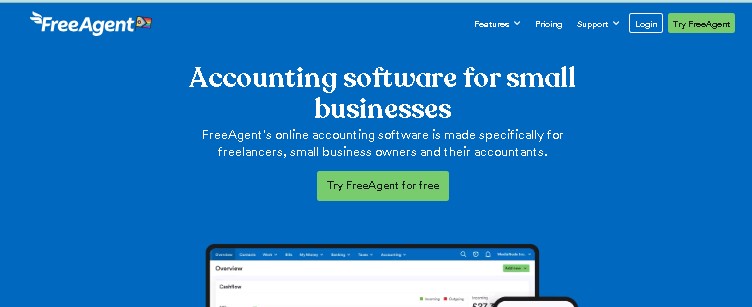
FreeAgent is 100% free with zero feature restrictions for UK businesses that maintain an active business current account with NatWest, Royal Bank of Scotland (RBS), or Mettle. It offers direct HMRC MTD filing for VAT and Self Assessment.
- The Loophole: Completely free with zero feature restrictions if you maintain an active business current account with NatWest, RBS, Ulster Bank, or Mettle.
- Features: Offers unrestricted automated bank feeds, unlimited corporate invoicing, expense tracking, project time-billing, and a full PAYE payroll module.
- Compliance: Fully HMRC-approved for direct filing of MTD VAT returns and Self Assessment tax calculations directly from your live dashboard.
3. Sage Free Accounting Software
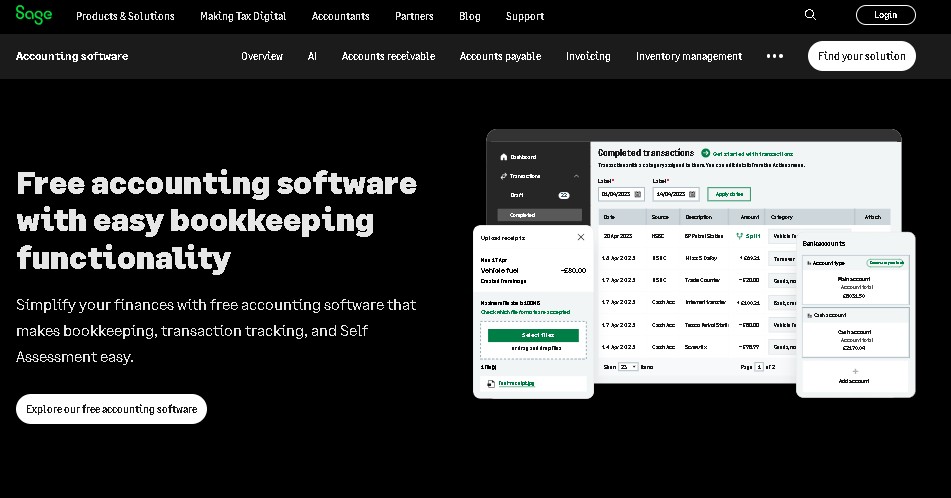
Sage’s free tier is an extremely restrictive layout built strictly for non-VAT-registered sole traders. It caps users at 5 sales invoices and 25 automated bank transactions per month.
- The Limits: This plan is explicitly for non-VAT sole traders. It’s a highly restrictive tier, capping you at just 5 sales invoices and 25 automated banking entries each month.
- Features: Strips out complex corporate accounting jargon, replacing it with a simple, guided digital record-keeping wizard.
- Compliance: Automatically maps all your logged business expenses directly to the HMRC SA103S short-form summary categories for easy Self Assessment.
4. Wave Free Accounting Software
Wave Accounting is no longer available for new small businesses in the UK. Wave officially discontinued its automated UK bank feeds and limited new sign-ups to focus entirely on the North American market.
- The Limits: Existing accounts still get unlimited cloud invoicing and expense tracking without monthly subscription fees. Wave makes its money purely on card processing percentages.
- Features: Provides beautiful, unrestricted professional invoicing tools, but the developer has discontinued automated UK bank feeds on the free version.
- Compliance: Designed mainly for the North American market. It lacks native MTD VAT filing and direct self-assessment mapping, requiring manual spreadsheets or separate bridging software to submit to HMRC.
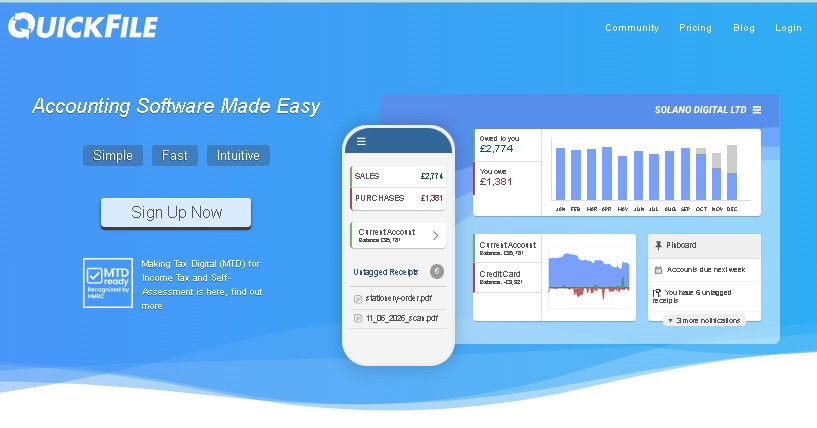
5. QuickFile
QuickFile is entirely free for small to medium UK operations processing under 1,000 nominal ledger entries per rolling 12-month period. It includes native, direct Making Tax Digital (MTD) VAT submission completely free of charge.
- The Limits: Completely free for small to medium operations processing under 1,000 nominal ledger entry rows per rolling 12-month period. Over that, a low-cost annual Power User fee applies.
- Features: Provides classic financial statements (P&L, Balance Sheets, Aged Debtors), automated TrueLayer bank feeds, and a mobile receipt-scanning portal.
- Compliance: Uniquely offers native, direct MTD VAT submission to HMRC completely free of charge.
6.Bokio
Bokio’s free accounting plan offers unlimited invoicing and manual bookkeeping with zero transaction caps. It supports free, direct MTD VAT submissions but locks live automated bank feeds behind premium tiers.
- The Limits: The basic freemium tier offers unlimited invoicing and manual bookkeeping entries without transaction caps.
- Features: Built for business owners who handle high volumes of customer billing but have relatively low or simple banking transactions.
- Compliance: Supports free, direct MTD VAT return submissions to HMRC. However, live automated bank feeds and smart transaction auto-matching are locked behind a premium plan.
7. Pandle
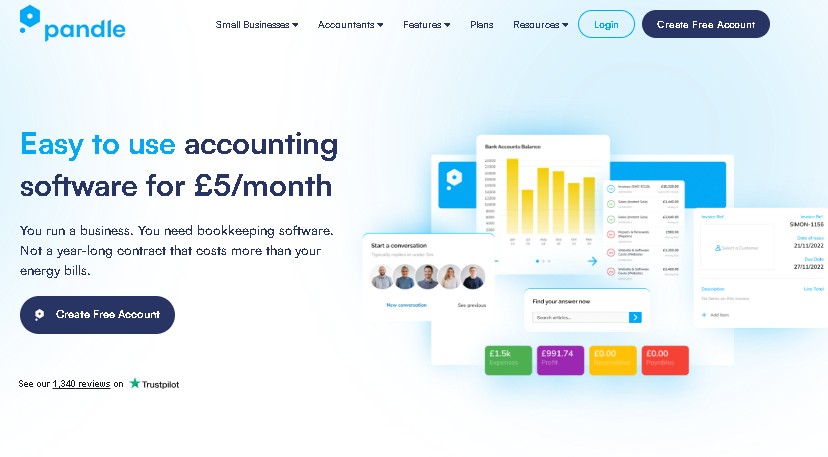
Pandle Free provides unlimited invoicing, quotes, and customer profiles with zero growth penalties. It includes free direct MTD VAT filing, but restricts live automated Open Banking feeds to its paid tier.
- The Limits: The Free Forever plan doesn’t penalise you for growth. You can create unlimited invoices, log quotes, and add as many customer profiles as you need.
- Features: Features a built-in Pandle Advice error-checking engine that catches double entries or date mismatches to prevent ledger mistakes.
- Compliance: Allows direct MTD VAT filing from the free interface. The major limitation is that live Open Banking links and receipt scanning require a Pro upgrade; the free tier uses manual CSV uploads.
8. Clear Books
Clear Books Free is a manual cloud bookkeeping tool built explicitly for micro-sole traders and landlords. It features zero transaction caps for income tracking but completely lacks automated invoicing and live bank feeds.
- The Limits: A stripped-back, manual logging layout engineered specifically for micro-sole traders and small landlords needing basic digital compliance.
- Features: Allows clean manual entry of cash expenses, rental income, and property repairs. Features straightforward profit-and-loss overviews.
- Compliance: Built explicitly to handle upcoming digital tax cycles with clean quarterly submissions, but completely lacks automated invoicing or live bank links.
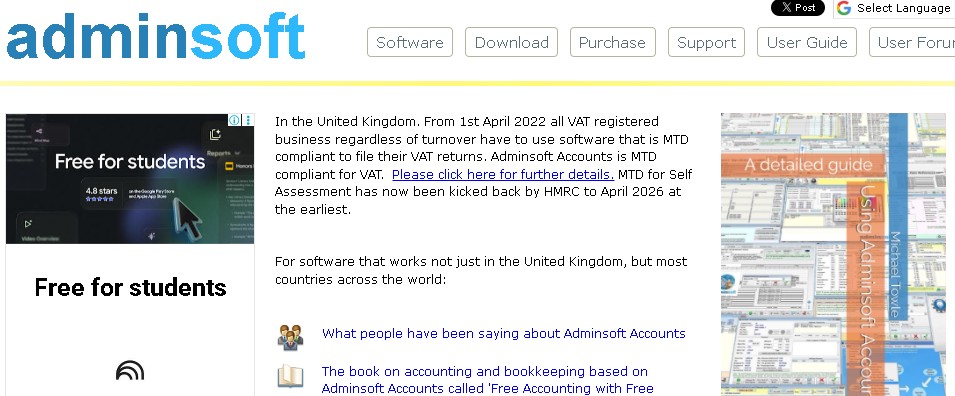
9. Adminsoft Accounts
Adminsoft Accounts is a free, ad-supported offline Windows desktop software package with no limits on transactions or invoicing. It calculates VAT and processes UK payroll locally but lacks live cloud bank links.
- The Limits: Free, ad-supported desktop software package for Windows. Contains zero caps on your ledger entries, customers, invoices, or transactions.
- Features: A massive, comprehensive offline system that includes full double-entry setups, stock/inventory control, purchase orders, and a complete UK payroll module.
- Compliance: Calculates VAT and includes an MTD submission system. The trade-off is a dated interface and no live bank feeds, requiring manual entry or CSV imports.
10.Manager.io
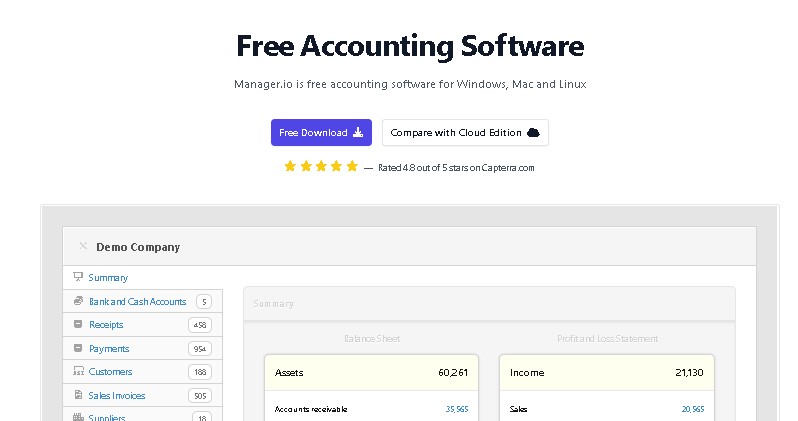
Manager.io offers a 100% unrestricted, free-forever local desktop accounting application for a single user. It features advanced double-entry tools but requires third-party bridging tools for HMRC filing.
- The Limits: The locally installed Desktop version is 100% unrestricted for a single user. Cloud or multi-user access requires moving to their paid hosting.
- Features: An incredibly advanced, flexible ledger supporting multi-currency operations, capital accounts, detailed project costing, and complex inventory assemblies.
- Compliance: Does not connect directly to HMRC APIs. It prints perfectly structured VAT summary sheets that you must upload to HMRC using separate, third-party digital bridging tools.
How Do the Top Free Bookkeeping Platforms Compare?
| Software Platform | True Cost Structure | Invoicing Limits | Automated Bank Feeds | HMRC MTD Filing Ready | Best Suited For |
| Zoho Books Free | Free under £35k turnover | Up to 1,000 items/year | Yes (Open Banking API) | VAT requires paid tier | Micro-businesses and startups |
| FreeAgent | Free via qualifying bank account | Unrestricted | Yes (Direct Integration) | Yes (VAT and Self Assessment) | NatWest, RBS, and Mettle clients |
| QuickFile | Free under 1,000 entries/year | Unrestricted within entry cap | Yes (TrueLayer Integration) | Yes (Direct VAT filing included) | Growing businesses wanting MTD |
| Bokio | Free forever (Basic) | Unrestricted | No (Manual uploads only) | Yes (Direct MTD VAT filing) | Cost-conscious VAT firms |
| Pandle | Free forever (Basic) | Unrestricted | No (Manual uploads only) | Yes (Direct MTD VAT filing) | Bookkeeping beginners |
| Sage Sole Trader | Free forever (Basic features) | 5 invoices per month | Limited (25 txns/month) | Yes (SA103S tracking built-in) | Non-VAT registered sole traders |
| Clear Books Free | Free forever (MTD tier) | No invoicing included | No (Manual entries only) | Yes (Quarterly ITSA Updates) | Sole traders and landlords |
| Adminsoft Accounts | Free (Ad-supported desktop) | Unrestricted | No (Manual / CSV entry) | Yes (Direct MTD filing module) | Traditional desktop users |
| Wave Accounting | Free (Monetised via card fees) | Unrestricted | No (Manual CSV uploads only) | No (Requires bridging tools) | Freelancers not needing automation |
| Manager.io | Free forever (Desktop only) | Unrestricted | No (Manual CSV imports) | No (Requires bridging tools) | Tech-savvy inventory businesses |
Best Free Accounting Software UK for Self-Employed & Sole Traders
Independent contractors operating as sole traders require simple tools to track income against deductible business expenses for their annual tax calculations. In practice, platforms like the Sage Sole Trader Free tier or Zoho Books match this environment perfectly.
They eliminate complex corporate terminology like share capital or director’s loans, focusing instead on categorising expenses against standard HMRC allowable expense categories.
- Sage Sole Trader Free Plan: Maps expenses directly to the HMRC SA103S short-form summary for simple Self Assessment, but restricts usage to 5 sales invoices and 25 bank transactions per month.
- Zoho Books (Free Tier): Includes automated Open Banking feeds, client quotes, and robust mobile apps for up to 1,000 transactions per year. Direct digital filing to HMRC is locked behind paid plans.
- Clear Books (Free MTD Tier): Features zero transaction caps for tracking basic income, cash expenses, and rental income. Built explicitly for manual record-keeping with free, direct digital tax updates to HMRC.
Best Free Accounting Software UK for Limited Companies
Incorporated entities operating as private limited companies face complex accounting responsibilities. They must manage double-entry ledgers, track director’s loan accounts, handle corporate tax liabilities, and generate formal balance sheets for Companies House submissions.
- FreeAgent (via Banking Loops): Fully unlocked with zero feature limits for NatWest, RBS, or Mettle account holders. Handles multi-user double-entry setups, corporate dividend logs, director’s loan accounts, PAYE payroll, and native MTD VAT filing.
- QuickFile (Free Tier): Offers a complete Chart of Accounts, live Balance Sheets, and P&L reports alongside automated TrueLayer bank feeds and free MTD VAT submissions. Free for up to 1,000 nominal ledger entries per rolling 12 months.
- Adminsoft Accounts: A permanently free, ad-supported Windows desktop suite with unlimited transactions. Packed with full corporate double-entry tools, stock control, purchase orders, and a complete UK payroll module, though it lacks live cloud bank feeds.
Benefits and Risks of Free Platforms
Adopting a free accounting or free bookkeeping software solution offers an attractive way to bypass fixed overheads, but it introduces distinct operational tradeoffs. Small business owners must look past the free label to understand how these systems impact daily productivity and long-term compliance.
Adopting a free accounting application offers an attractive way to bypass fixed overheads, but it introduces distinct operational tradeoffs.
Small business owners must look past the free label to understand how these systems impact daily productivity and long-term compliance.
Benefits of Free Accounting Software
- Immediate Overhead Reduction: Bypassing monthly SaaS fees saves micro-entities and early-stage startups up to £360 annually per user, preserving vital seed capital for core business growth.
- Automated Administrative Workflows: Even at the free tier, modern platforms integrate with UK Open Banking APIs to eliminate manual ledger entry, reduce human data mistakes, and accelerate invoice matching.
- Gateway to Digital Compliance: Free platforms act as an accessible stepping stone toward HMRC’s growing digital mandates, forcing systematic record-keeping well ahead of rigid tax deadlines.
- Clear Cash Flow Visibility: Moving away from static spreadsheets to live dashboards provides real-time tracking of aged debtors and business outgoings, resulting in more agile financial decision-making.
Risks of Free Accounting Software
- The Growth Ceiling Trap: Most free versions feature hidden operational limits, such as strict caps on monthly invoicing volumes or total annual ledger rows. Exceeding these limits can freeze your workflow until you upgrade to a premium plan.
- Hidden Compliance Hurdles: Many freemium platforms calculate your tax liabilities accurately but lock direct, native Making Tax Digital (MTD) filing to HMRC behind a paid subscription paywall.
- Data Silos and Integration Gaps: Free accounting tools often function in isolation, lacking the API flexibility to cleanly sync with your inventory management software, e-commerce storefront, or customer relationship management (CRM) tools.
- Limited Customer Support and Security Infrastructure: Free tiers rarely include live telephone or web-chat support, leaving users dependent on peer forums during critical system bugs. Additionally, lower-tier providers may lack bank-grade AES-256 data encryption or monetise your platform usage through anonymised data-mining insights.
How to Choose the Right Free Bookkeeping Tool for Your Business Structure?
Selecting a financial platform requires matching the legal requirements of your specific business entity with the data constraints of the software.
- Assess the True Volume Limitations: Always evaluate your rolling 12-month transaction volume against software caps. Platforms like QuickFile limit total ledger rows (1,000 lines), while others like Sage restrict customer invoices (5 per month). Pick a platform whose caps comfortably exceed your current operations.
- Verify Direct HMRC MTD Filing Tracks: If your business is VAT-registered or preparing for upcoming digital income tax thresholds, ensure the platform offers native MTD links. Relying on external bridging tools adds a layer of administrative friction and margin for error.
- Evaluate Banking and Automation Requirements: Determine if you need live bank feeds. Genuinely free automation reduces weekly administrative work, but platforms like Zoho Books limit this by overall revenue, while others like Pandle require manual CSV data uploads on free tiers.
- Check Multi-User and Cloud Access Needs: If you work with a remote team or require your external accountant to log in simultaneously, avoid local desktop-only configurations. Ensure the cloud architecture supports secondary guest access without forcing a premium tier upgrade.
How to Set Up a Free MTD-Compliant Accounting Framework?
Setting up a free, MTD-compliant bookkeeping framework requires verifying your business’s legal entity status, activating Open Banking connections, mapping standard UK nominal ledgers, and linking HMRC Government Gateway authorisation. Follow the functional, sequential implementation roadmap below.
- Verify Your Legal Entity Status and Submission Track: Determine if your business layout operates as a Sole Trader or Limited Company. This establishes whether you need simple expense categorisation (SA103S short form) or complex corporate double-entry ledgers with balance sheets for Companies House.
- Check Your Commercial Banking Relationships: Cross-reference your active bank accounts. If you hold a business current account with NatWest, RBS, or Mettle, proceed immediately to claim your unconstrained, free FreeAgent license via your banking portal rather than choosing a capped freemium utility.
- Map the UK Chart of Accounts & Open Banking Feeds: Configure your nominal ledger codes to align seamlessly with HMRC tax reporting criteria. Activate your platform’s Open Banking API links (e.g., TrueLayer) to automate transaction flows and eliminate manual CSV statement importing errors.
- Link Software APIs to Your HMRC Government Gateway: Navigate to your chosen platform’s compliance dashboard. Enter your business’s Government Gateway user ID and password to grant third-party application permission, unlocking direct, digital tax return submissions for VAT and Income Tax Self Assessment (ITSA).
When Should Your Small Business Upgrade to Paid Tools?
A small business must transition to a paid premium accounting tool when its annual turnover exceeds software revenue thresholds (such as Zoho’s £35,000 limit), when monthly transaction volumes cross entry caps, or when your operational footprint scales to require multi-currency ledgers and integrated payroll systems.
While free accounting frameworks are perfect for early-stage record-keeping, scaling businesses will naturally hit functional limitations.
Many tech-forward firms tracking these tech shifts often wonder, will AI replace accountants entirely? While automation reduces manual bookkeeping tasks, humans remain vital for strategic tax planning.
Transitioning to a premium, paid tier becomes a structural necessity when you encounter the following triggers:
- Breaching Revenue Ceilings: Freemium platforms often enforce hard income caps, such as Zoho Books locking its free tier once your annual turnover crosses £35,000.
- Exceeding Data Caps: Scale-ups easily outgrow strict volume limits, such as Sage’s 5-invoice monthly limit or QuickFile’s 1,000 annual ledger row ceiling, which freeze workflows until upgraded.
- Expanding Team Access: Free plans are typically restricted to a single user. Hiring staff or granting direct, concurrent access to an external accountant requires paid multi-user licenses.
- Unlocking Automated Tax Filing: While free tiers calculate tax figures, many restrict direct API submissions to HMRC for VAT or Income Tax Self Assessment (ITSA) behind a premium paywall.
- Requiring Global Ledgers: Scaling into international markets requires advanced multi-currency engines and automated exchange rate updates that are rarely included in free versions.
- Demanding Deep Automation: Upgrading replaces manual administrative friction with advanced systems like native PAYE payroll modules, automated receipt scanning, and smart transaction auto-matching.
Reaching these growth milestones turns premium software into a strategic investment. Upgrading secures the automation, advanced reporting, and long-term tax compliance required to support your business’s continued expansion.
FAQ about Free Accounting Software
Is there a completely free accounting software for UK small businesses?
Yes. Platforms like QuickFile and Zoho Books provide permanently free cloud bookkeeping tiers with specific transaction or revenue limits. Alternatively, businesses banking with NatWest, RBS, or Mettle can access the full-featured FreeAgent suite at no extra cost.
Does HMRC offer a free accounting app?
No. HMRC provides basic online portals for submitting Self Assessment tax returns and VAT data, along with the Basic PAYE Tools app for payroll. However, they do not provide comprehensive bookkeeping software to track daily business transactions or generate client invoices.
Can I use Excel or Google Sheets for my small business bookkeeping?
You can use spreadsheets for internal record-keeping, but they lack automation and increase the risk of manual errors. Additionally, under modern HMRC rules, spreadsheets cannot submit data directly for VAT or Income Tax Self Assessment without separate bridging software.
Which free accounting software is MTD compliant?
QuickFile includes direct Making Tax Digital (MTD) VAT filing on its free tier. FreeAgent is also fully MTD compliant and free for eligible bank customers. Zoho Books tracks VAT on its free tier, but requires a paid upgrade for direct HMRC filing.
Is Tally available for free?
Tally offers free trial options and educational versions, but its full enterprise bookkeeping software requires a paid subscription. It is widely used internationally but has lower adoption rates for native cloud compliance within the UK small business ecosystem.
Is Zoho accounting really free?
Yes, Zoho Books has a permanently free plan for UK businesses with an annual turnover under £35,000. This tier includes core bookkeeping, invoicing, and bank feeds, but limits data processing to 1,000 transactions per year.
Is Zoho better than Tally?
For UK small businesses, Zoho Books is generally more suitable because it offers a modern cloud-native interface, mobile apps, and integrates with UK Open Banking APIs. Tally is highly capable for complex inventory and warehousing, but features a steeper learning curve.
Is Xero approved by HMRC?
HMRC does not officially approve commercial products, but Xero is on their recognised list of software compatible with Making Tax Digital. While fully compliant, Xero does not offer a permanently free tier for small businesses.
