
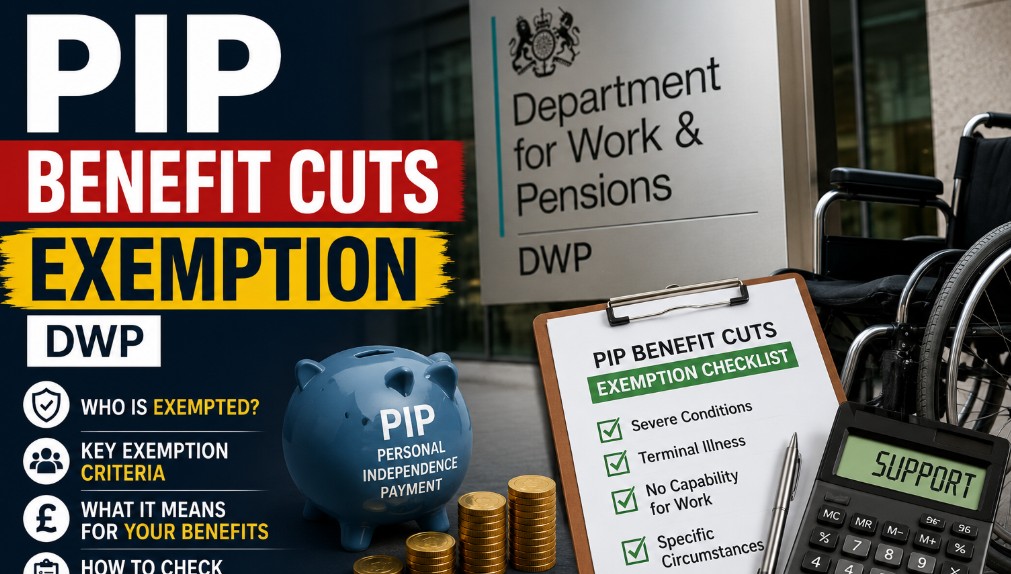
Department for Work and Pensions administrative adjustments mean UK claimants face systemic structural changes regarding disability allocations.
Navigating the criteria for a PIP benefit cuts exemption DWP pathway requires evaluating legislative transitions, operational assessment guidelines, and strategic protection clauses established for vulnerable households.
Key Takeaways
- The Department for Work and Pensions has deferred direct Personal Independence Payment criteria changes until the final Timms Review publication.
- Claimants who receive any component of Personal Independence Payment are granted a statutory legal exemption from the sweeping UK benefit cap limits.
- The Universal Credit health element standard rate drops to £217.26 per month for non-exempt new applications submitted after 5 April 2026.
- The standard earnings threshold dictating general Universal Credit benefit cap exemptions rises to £881.23 per month from 1 April 2026.
What is PIP benefit?
Personal Independence Payment (PIP) is a non-means-tested, non-contributory UK welfare benefit designed to help working-age adults cover the extra living costs associated with long-term physical or mental health conditions or disabilities.
It is completely detached from personal savings, income, or employment status. Because it is entirely detached from income, personal savings, or National Insurance contributions, you can claim PIP whether you are employed, unemployed, or still in education.
Eligibility is evaluated purely on how your condition limits your day-to-day functioning across specific daily living and mobility activities rather than the diagnosis itself.
What Are the New PIP Rules and PIP Benefit Cuts Exemption DWP?
Navigating the 2026/2027 welfare updates requires understanding where the Department for Work and Pensions (DWP) is actively changing rates versus where protections have been implemented.
While aggressive changes to core PIP eligibility points were initially proposed, they have been modified following systemic reviews.
The primary structural changes in points and exemptions across the welfare system are broken down below:
- The Timms Review Deferral: Core PIP eligibility rules, the 12-point scoring thresholds, and the 50% rule for fluctuating conditions are legally frozen and unchanged until late 2026. The ongoing Timms Review will dictate long-term overhauls, but it offers immediate structural stability for active PIP award holders.
- The Universal Credit Health Element Split: This is where the primary budget adjustment is concentrated. From 6 April 2026, the standard Universal Credit Limited Capability for Work and Work-Related Activity (LCWRA) health element has been cut by roughly half for unexempt new claimants, dropping from £429.80 to £217.26 per month.
- Severe Condition Criteria Point Exemptions: New claimants can bypass this 50% reduction and maintain the higher £429.80 rate if they clear the DWP’s Severe Conditions diagnostic gateway. This requires medical verification that a condition is lifelong, will not improve, and constantly fulfills at least one Work Capability Assessment descriptor.
- The Benefit Cap Absolute Exemption: Claimants who hold any active component of PIP (regardless of standard or enhanced tiers) receive a total statutory exemption from the overarching UK benefit cap limits (£25,323 in London / £22,020 nationally).
- Standard Earnings Threshold Rise: For general Universal Credit claimants seeking a work-based benefit cap exemption, the monthly earnings threshold rises to £881.23 per month from 1 April 2026.
How Does the PIP Benefit Work under UK Law?
Personal Independence Payment was originally established under Part 4 of the Welfare Reform Act 2012. This statutory framework designed the benefit to replace Disability Living Allowance for working-age individuals.
The law dictates that the benefit remains entirely non-means-tested and non-contributory. Consequently, entitlement relies strictly on the functional impact of a health condition rather than employment status or accumulated National Insurance contributions.
What does the PIP benefit cover?
The allowance provides financial assistance for the additional living expenses linked to long-term physical or psychological conditions.
When reviewing details on how much PIP is going up in April, official 2026/2027 fiscal year updates confirm that the standard and enhanced tiers across both components are structurally maintained.
How much is PIP per month in 2026?
| PIP Component Tier | Weekly Rate (2026/2027) | Monthly Equivalent Calculation |
| Daily Living: Standard | £76.70 | £332.37 |
| Daily Living: Enhanced | £114.60 | £496.60 |
| Mobility: Lower Tier | £30.30 | £131.30 |
| Mobility: Higher Tier | £80.00 | £346.67 |
What are the 12 points for PIP?
The Department for Work and Pensions coordinates functional assessments across ten daily living activities and two mobility activities. Each activity features scored descriptors ranging from 0 to 8 or 12 points.
To qualify for a baseline standard award, a claimant must aggregate a minimum of 8 points within a single component category. An enhanced award demands a minimum cumulative score of 12 points.
What is the PIP 50% rule?
The operational framework incorporates the PIP 50% rule to evaluate fluctuating health conditions.
Under this regulatory guideline, a specific descriptor applies if the functional limitation impairs the claimant for more than 50% of a cumulative 12-month period.
Case managers look at historical medical logs to ensure this threshold is mathematically satisfied during independent reviews.
What do these changes mean for disabled people?
The 2026 operational shifts create a dual-layered reality for disabled individuals in the UK.
While existing Personal Independence Payment (PIP) and Universal Credit health awards remain legally insulated through grandfathering protection clauses, new post-April 2026 claimants face a substantially lower monthly income baseline and heightened clinical assessment criteria.
Protection for Existing and Severe Claims
If you hold an active PIP award or were already receiving the UC health element before 6 April 2026, you are protected by grandfathering policies. Your standard payments remain insulated from the structural reductions hitting new claims.
A Higher Evidentiary Hurdle
While your core PIP amount is safe for now, the DWP has increased targeted face-to-face health reassessments.
Preparing for potential PIP assessment trick questions during these reviews is vital, as decision-makers are demanding a much higher standard of objective clinical evidence like specialist consultant letters and updated medical logs to clear descriptor thresholds.
Squeeze on New Universal Credit Claimants
The most significant impact falls on individuals filing new health-related Universal Credit applications after April 2026.
Unless they qualify for a terminal illness protocol or the severe, lifelong condition exemption, they will face a substantially lower monthly income baseline than those who applied before the deadline.
Who Qualifies for a PIP Benefit Cuts Exemption DWP?
The Department for Work and Pensions explicitly protects individuals holding active awards established before the regulatory adjustments.
Under the amended grandfathering guidelines finalized in February 2026, any individual with an established entitlement to the Universal Credit Limited Capability for Work and Work-Related Activity component on or before 5 April 2026 is exempt from the multi-year payment freeze and baseline budget reductions.
Who is at risk of losing PIP vs. who is protected?
Vulnerability to award adjustments correlates directly with assessment renewal timelines and the nature of the underlying diagnosis.
| Claimant Group Status | Risk Exposure Level | Primary Applicable Statutory Rule |
| Pre-2026 Active Award Holders | Exempt / Protected | Grandfathered under the February 2026 policy revision framework. |
| New Post-April 2026 Applicants | Exposed to New Lower Tier Rates | Subject to the flat £217.26 Universal Credit health limit. |
| Fluctuating Neurodiverse Conditions | High Review Frequency | Subject to the mental health and neurodiversity review criteria. |
| Terminal Illness Claimants (SREL) | Fully Exempt | Fast-tracked via Special Rules for End of Life protocols. |
PIP 2026 Welfare Review
Misinformation surrounding the 2026 Department for Work and Pensions transitions has caused widespread anxiety for households relying on disability support.
The breakdown below clarifies the legal realities of the changes, separating urgent policy shifts from safe, grandfathered allocations.
| Myth | Reality |
| Myth: Every PIP claimant will see an immediate cash reduction under the 2026 budget changes. | Reality: Core PIP rates are legally frozen and protected; budget adjustments are targeted at new Universal Credit health elements. |
| Myth: Returning to employment will automatically trigger a DWP face-to-face reassessment. | Reality: PIP is non-means-tested and completely detached from work status; entitlement depends purely on functional limitations. |
| Myth: Legacy ESA support components will lose protection when moving over to Universal Credit. | Reality: Existing claimants holding the support component before 5 April 2026 qualify for transitional grandfathering rules. |
Will pensioners lose their PIP?
Claimants who reach State Pension Age while holding a valid award do not lose their entitlement.
Statutory guidelines dictate that Personal Independence Payment cannot be newly claimed after reaching State Pension Age; however, existing ongoing awards are legally sustained.
Some older claimants may also qualify for historical UK pensioners PIP backdated payments. These ongoing entitlements transition smoothly into senior protection status, shielding older claimants from working-age welfare reform interventions.

How Does a PIP Award Affect Universal Credit and Other Benefits?
An active entitlement does not reduce Universal Credit allocations. Because it is non-means-tested, the income is entirely disregarded during the monthly calculation of standard Universal Credit awards.
Furthermore, securing an award frequently unlocks supplementary premiums or premium elements within the wider legacy system.
Does PIP exempt you from the benefit cap?
Yes, securing an award provides an absolute household exemption from the statutory UK benefit cap.
Under normal conditions, working-age benefit allocations are restricted to £25,323 annually inside London and £22,020 annually across the rest of Great Britain.
The exact mechanism of the benefit cap exemption means that the moment a single member of a household qualifies for any tier of Personal Independence Payment, the overarching household cap is fully removed, enabling the receipt of full housing and child support allocations without restriction.
Can I claim Pension Credit if I am on PIP?
Yes, individuals who have reached State Pension Age can simultaneously claim Pension Credit and maintain their existing disability award.
When checking eligibility formulas, the presence of a Daily Living award component frequently qualifies the pensioner for the Severe Disability Addition within the Pension Credit calculation framework, boosting the weekly guarantee credit baseline.
Can the DWP Deduct Money or Tax Your PIP Payments?
No, the benefit is entirely free from UK Income Tax liability. It does not need to be declared as taxable income to His Majesty’s Revenue and Customs, and it remains completely isolated from personal tax allowance calculations.
Can DWP take deductions from PIP?
The Department for Work and Pensions is legally restricted from taking direct administrative deductions from a Personal Independence Payment award to settle standard third-party utility debts or overpayment recoveries.
While standard benefits like Universal Credit or Jobseeker’s Allowance face direct deductions, disability awards are statutorily protected to ensure the capital goes directly toward fulfilling specific daily functional needs.
How much can DWP deduct from benefits in total?
For general means-tested benefits, the Department for Work and Pensions enforces a strict maximum cap on compulsory deductions.
| Benefit Type Subject to Deductions | Standard Maximum Deduction Cap (2026) |
| Universal Credit Standard Allowance | Limited strictly to 25% of the baseline award. |
| Legacy Income Support / ESA | Capped at specific statutory flat rates for third-party arrears. |
| Disability Components (PIP / DLA) | 0% – Direct administrative debt deductions are prohibited. |
When reviewing decisions on a case file, a common pattern is that debt management teams try to maximize recovery rates from standard allowances, but they must leave the core disability award untouched.
What is a DWP decision maker for PIP?
An official Department for Work and Pensions case manager, formally known as a decision-maker, evaluates independent health professional reports alongside claimant evidence to determine final award allocations.
How to document your case?
To secure a stable outcome or appeal an adverse ruling, claimants should systematically follow these procedural steps:
- Obtain a comprehensive copy of the formal DWP Health Professional Consultation Report
- Cross-reference every assigned descriptor score against your primary medical records
- Collect precise objective evidence including Consultant Letters and Prescription Sheets
- Draft a comprehensive Mandatory Reconsideration Request explicitly citing descriptor errors
- File the request within the strict statutory 1-month notification window
- Maintain independent copies of all digitally submitted tracking logs and postal receipts
How to get PIP Benefit Cuts Exemption DWP?
Securing an exemption from the wider benefit reductions and preserving your higher entitlement relies on proving your timeline or meeting the DWP’s strict health benchmarks.
- Establish Pre-2026 Status (Grandfathering): Ensure your health journey began before the regulatory shift. You are automatically exempt as a pre-2026 claimant if your Universal Credit health claim or initial fit-note submission occurred on or before 5 April 2026. If transitioning from Employment and Support Allowance (ESA), confirm you held the support component on 5 April 2026 to carry over protection.
- Secure Medical Evidence for Severe Conditions: If you are a new applicant, request a comprehensive diagnosis log from an NHS practitioner. The evidence must explicitly state that your disability or condition is lifelong, incurable, and prevents all forms of gainful employment.
- Cross-Reference with WCA Descriptors: Align your medical documentation directly with the Work Capability Assessment criteria. To qualify for the higher-rate exemption, your evidence must show that you constantly satisfy at least one severe LCWRA functional descriptor.
- Trigger the Benefit Cap Removal via PIP: Submit a standalone PIP claim alongside your Universal Credit application. Check the PIP enquiry line opening times to call and request your initial application pack directly from the DWP. The moment the DWP processes an active award for any tier of PIP, ensure your case manager updates your online journal to trigger the absolute household exemption from the benefit cap.
Important Protection Reminder: Personal Independence Payment remains entirely free from UK Income Tax, does not count toward your annual tax-free allowance, and is statutorily protected from direct DWP administrative debt deductions for third-party arrears.

Conclusion
Managing shifting welfare structures requires an analytical approach to Department for Work and Pensions guidelines.
Claimants must actively audit their current review dates, ensure their medical evidence aligns directly with the relevant descriptor points, and confirm their grandfathered status under the pre-2026 claimant protection rules.
If any reduction notice is issued, submitting a well-documented Mandatory Reconsideration request within the one-month statutory deadline remains the vital next step to preserving entitlement.
Disclaimer: This publication is for informational purposes only, does not constitute formal legal or financial advice, and individuals should consult an authorized advice service regarding specific DWP appeals.
FAQ
Does the DWP pay PIP directly into bank accounts?
Yes, the Department for Work and Pensions issues payments directly into a designated bank, building society, or credit union account every four weeks in arrears.
Who is going to lose benefits under the new 2026 welfare review?
New claimants failing the revised capability metrics after 5 April 2026 face significant reductions to the Universal Credit health element. Existing grandfathered individuals remain fully protected.
How much is PIP going up in 2026?
The 2026/2027 statutory adjustments locked in the enhanced daily living component at £114.60 per week and the higher mobility component at £80.00 per week.
Does working trigger an automatic PIP reassessment under the new rules?
No, entering employment does not trigger an automatic assessment. Entitlement is determined by functional impairment criteria rather than daily employment parameters.
What is the pre-2026 claimant rule?
It is a dedicated grandfathering clause protecting anyone with an active, validated Limited Capability for Work award prior to 5 April 2026 from new budget cuts.
Can you claim PIP if you have never worked in the UK?
Yes, because the benefit is non-contributory, eligibility is entirely detached from personal National Insurance contribution records or prior work histories.
Does PIP count toward the annual tax-free allowance?
No, it is a non-taxable welfare payment and does not consume any portion of your personal UK income tax allowance.
