

Learning how to win a grievance hearing as an employee starts with understanding that the UK process is a fact-finding mission, not a courtroom drama.
While a sense of injustice is valid, success is defined by how well you present a coherent paper trail and offer a resolution that fits within your employer’s commercial and legal reality.
How to win a grievance hearing as an employee in the UK?
To win a grievance hearing as an employee in the UK, you must prove that your employer has breached their own policies, the ACAS Code of Practice, or UK employment law.
Success depends on aligning your complaint with specific company policies or statutory rights, such as those found in the Equality Act 2010, and proposing a resolution that reflects the ACAS Code of Practice.
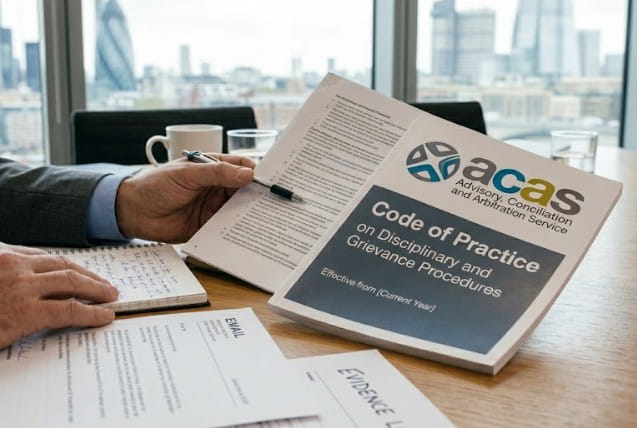
What Actually Happens During a Dispute?
In the UK, the grievance process is fundamentally an internal investigative fact-finding mission, not a legal trial. Understanding this distinction is the first step toward winning.
- The Objective: The hearing is designed to resolve issues within the business to avoid the cost and reputation damage of an Employment Tribunal.
- The Burden of Proof: While not a court, the balance of probabilities usually applies. You must show that it is more likely than not that your version of events is true.
- The Winner: Success rarely goes to the person who is most right morally, but to the person who provides the most comprehensive paper trail (emails, Slack logs, and meeting notes) and suggests a solution that aligns with the ACAS Code of Practice.
What are the 5 steps of the grievance process in the UK?
Adhering to the statutory rules of the road is non-negotiable if you want your claim to hold weight.
Much like the legal complexities seen in the Petition to Revoke Article 50, procedural accuracy is everything; if you eventually seek an Employment Tribunal, the judge will check if you followed these five statutory steps:
- Informal Resolution: Attempting to resolve the issue through a quiet chat with a line manager.
- Formal Written Grievance: Submitting a detailed letter that triggers the formal policy.
- The Grievance Hearing: A formal meeting where you present your case and evidence.
- The Decision: The employer provides a written outcome, either upholding or dismissing your claims.
- The Appeal: If dissatisfied, you have the right to a second hearing with a different manager.
What are the most common reasons for raising a grievance?
Most grievances in the UK fall into four specific categories. Understanding where your issue sits helps you use the correct terminology during the hearing.
- Terms and Conditions: Disputes over pay, holiday entitlement, or forced changes to working hours often arise from scrutiny during HMRC payroll checks.
- Health and Safety: Substandard working environments or being forced to work in dangerous conditions.
- Workplace Relationships: Bullying, harassment, or silent retaliation from a supervisor.
- Discrimination: Unfair treatment based on protected characteristics like age, disability, or gender.
| Grievance Category | Evidence Required | Statutory Framework |
| Bullying/Harassment | Logs of incidents, witness statements, and emails. | Equality Act 2010 |
| Pay Disputes | Payslips, contract of employment, P60S. | Employment Rights Act 1996 |
| Health & Safety | Risk assessments, photos of hazards, and doctors’ notes. | Health & Safety at Work Act 1974 |
What should one say at a grievance meeting to ensure success?
Articulating your case effectively is the difference between being heard and being ignored. You will find the most success by adopting the Fact-Impact-Solution model, a method designed to strip away emotion and highlight corporate liability.
Instead of saying, My boss is mean, say, On the 14th of March, my manager used derogatory language (Fact), which made me feel humiliated and caused a panic attack (Impact). I am requesting a mediation session or a change in reporting line (Solution).

What should not be said in a grievance hearing?
Avoid making without prejudice offers during the formal hearing unless you have a solicitor present. Do not use inflammatory language or make threats about suing the company immediately.
This can make you appear vexatious rather than a victim. Keep your focus entirely on how to win a grievance hearing as an employee strategy: focus on the current breach and avoid muddying the waters with historical baggage that isn’t in your formal letter.
What are red flag words for HR, and what words scare them?
While HR often presents a friendly face, their primary mandate is to insulate the business from litigation. Certain trigger words alert them to the fact that you know your rights and may take the matter to a tribunal.
- Victimisation: Referring to being treated badly because you raised a complaint.
- Detriment: Explaining the specific loss (financial or emotional) you have suffered.
- Protected Characteristic: Mentioning disability, race, or pregnancy.
- Fundamental Breach: Suggesting the employer has broken the trust and confidence of the contract.
- Constructive Dismissal: Hinting that the environment is so toxic that you are being forced to resign.
In a UK context, using the term Victimisation carries significantly more weight than bullying. Under the Equality Act, victimisation is a specific legal claim that triggers protection if you are treated poorly for raising a protected act, making HR much more likely to seek a swift resolution.
What is the role of HR in a grievance?
Many employees walk into the room expecting HR to act as a neutral referee; in truth, they are there to ensure the company doesn’t trip over its own feet legally. In a grievance hearing, HR acts as a procedural advisor to the manager conducting the hearing.
Their job is to ensure the company complies with the law to avoid lawsuits. They are not your lawyer, but they are motivated to settle the issue if you present a credible threat of a successful tribunal claim.

What happens if you win a grievance at work?
Winning usually results in remedies. These can be categorised into three outcomes:
- Management Action: The person you complained about is disciplined or moved.
- Financial Compensation: Back pay is issued, or a settlement is reached. If you receive a larger payout, it is worth checking how your capital tax allowance and the £30,000 tax-free threshold for redundancy/settlements might affect your take-home amount.
- Policy Changes: The company implements new training or safety measures.
| Outcome | Implementation Time | Responsibility |
| Apology | Immediate | Named Party |
| Redeployment | 2–4 Weeks | HR / Department Head |
| Compensation | Next Pay Cycle | Payroll / Finance |
What happens if you lose a grievance?
If the grievance is not upheld, you have the right to a Stage 3 grievance (The Appeal). You must submit your appeal in writing, usually within 5 working days, stating exactly why the original decision was wrong, for example, if evidence was ignored or the investigator was biased.
Dealing with Silent Retaliation
We often see a trend of silent retaliation following a hearing, where an employee suddenly finds themselves left off email chains or passed over for overtime.
Document these instances immediately, as they form the basis for a secondary grievance or a whistleblowing protection claim.
Can I resign after a grievance?
You can, but resigning hastily can scupper a claim for Constructive Unfair Dismissal. To win, you must prove a fundamental breach of contract and show you didn’t affirm the contract by staying too long. Always consult ACAS before handing in your notice.
Strategy for Success Grievance Hearing
To maximise your chances, follow these tactical steps during the preparation phase:
- Request a Subject Access Request (SAR): Get copies of all internal emails mentioning your name.
- Choose the Right Companion: Under UK law, you have the right to be accompanied by a trade union rep or a colleague. A union rep is usually more intimidating to HR.
- Prepare a Statement: Read from a pre-written script to ensure you don’t miss key points due to stress.
- Record the Meeting: Ask for permission to record. If they refuse, take a dedicated note-taker with you.
- Highlight Procedural Flaws: If the employer delayed the meeting or didn’t provide evidence in advance, point this out as a breach of the ACAS Code.
- Identify the Toxic Boss: If your grievance concerns a manager, show a pattern of unprofessional behaviours rather than a one-off event.
Final Summary
Winning a grievance is a strategic process built on preparation and persistence. To understand how to win a grievance hearing as an employee, keep the following pillars in mind:
- Evidence-First Approach: Success depends on a clear, dated timeline and a paper trail that shifts the focus from emotion to objective, documented facts.
- Tactical Vocabulary: Use trigger words like Victimisation, Detriment, and Fundamental Breach to signal to HR that you understand your statutory rights.
- Procedural Integrity: Always follow the formal appeal process if the initial decision is unfair; failing to do so can weaken future claims.
- Tribunal Readiness: If the internal route fails, your adherence to the ACAS Code serves as the essential foundation for a successful Employment Tribunal claim.
FAQ about How to win a grievance hearing as an employee
Can I be fired for raising a grievance?
No. In the UK, this is considered automatic unfair dismissal or victimisation. You are legally protected from being fired for asserting your statutory rights.
How long does a grievance hearing last?
Most hearings last between 1 and 3 hours, depending on the complexity of the evidence and the number of witnesses involved.
What is a Stage 3 grievance?
This is typically the final internal appeal stage, where a senior director or external consultant reviews the case to ensure fairness.
What are the 4 unprofessional behaviours in the workplace?
In a UK grievance context, these are typically identified as harassment, bullying, quiet firing (deliberate exclusion), and shouting or verbal abuse.
How do I professionally say I have anxiety?
Inform HR in writing that you have a mental health condition that you believe qualifies as a disability under the Equality Act 2010. Formally request reasonable adjustments for the hearing, such as extra breaks or having a companion present for emotional support.
What is HR most afraid of?
HR is most afraid of an Employment Tribunal (ET1) claim, as it is public, expensive, and cannot be easily silenced once filed.
Should I quit if I lose my grievance?
Do not hand in your notice immediately. Consult ACAS or an employment solicitor first. Resigning too hastily can undermine a potential claim for constructive unfair dismissal, as a tribunal will look at whether you exhausted all internal appeal routes first.
