
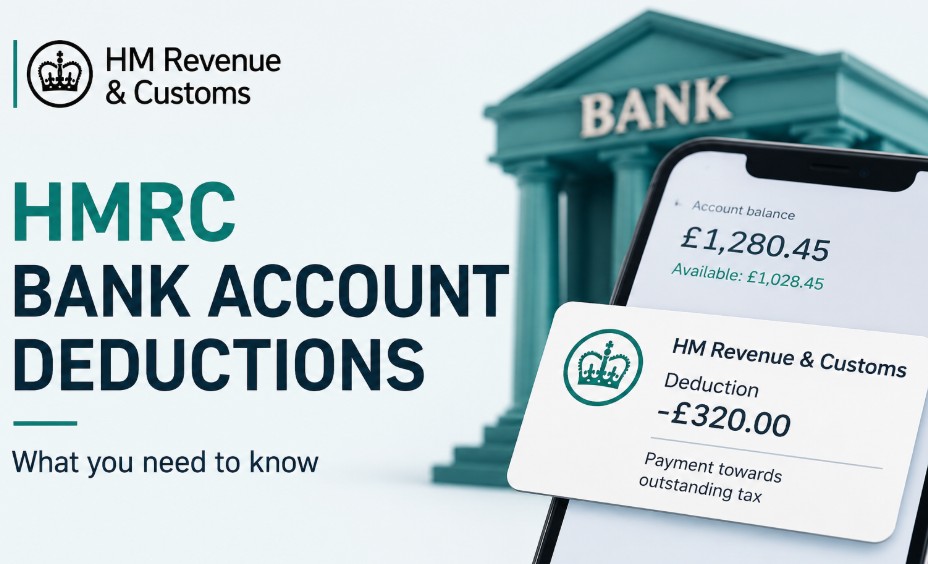
When outstanding tax liabilities go completely unpaid, the legal mechanism used by the tax authority is known as HMRC bank account deductions.
Technically referred to as Direct Recovery of Debt (DRD), this represents a strict statutory power granted to HM Revenue and Customs to recover money directly from a taxpayer’s bank or building society account.
What is HMRC Bank Account Deductions DRD?
HMRC bank account deductions, legally known as Direct Recovery of Debt (DRD), is a statutory enforcement power that allows HMRC to withdraw unpaid tax debts directly from a taxpayer’s liquid bank accounts, building society accounts, and Cash ISAs without getting a court order first.
Direct Recovery of Debt (DRD) was introduced under the Finance Act 2015. It grants HMRC the administrative authority to recover established tax liabilities directly from a debtor’s liquid assets.
This power is not used as a first resort. It is designed specifically to target a small minority of taxpayers who have the clear financial capability to clear their tax bills but consistently choose to ignore communications, refuse to engage, and avoid paying what they owe.
The Reality of Direct Recovery of Debt
The reality of Direct Recovery of Debt is that HMRC cannot seize your funds arbitrarily or spy on your daily transactions.
It is a strictly regulated, late-stage recovery method used only after all standard communication channels, debt collection letters, and mandatory face-to-face visits have been completely exhausted.
Contrary to common myths, HMRC does not use this power to browse through your accounts at will. Before any funds are held or moved, HMRC must satisfy strict legal criteria:
- They must formally confirm that you have the financial means to pay the debt.
- They must prove they have exhausted all other communication channels.
- For individuals, they are legally required to conduct a face-to-face visit to assess your situation and check for personal or financial vulnerabilities before proceeding.
Legal Safeguards for Taxpayers
Statutory safeguards protect taxpayers from financial hardship by enforcing two strict limits: HMRC can only use DRD if the total tax debt is at least £1,000, and they are legally required to leave a minimum aggregate balance of £5,000 across all your combined bank accounts untouched.
The legislation imposes a mandatory financial cushion to protect your day-to-day stability. These rules ensure that individuals and businesses can continue to pay essential household or operational expenses like mortgages, rent, utilities, and wages.
Safeguard Thresholds
- The £1,000 Debt Floor: The established tax or tax credit debt must be at least £1,000 before this process can even be considered.
- The £5,000 Balance Protection: HMRC cannot take money that reduces your total balance across all accounts to below £5,000.
Can HMRC actually take money from your bank account?
Yes, they can, but absolutely not without warning or an extensive legal process. HMRC cannot simply access your account arbitrarily or freeze your everyday banking on a whim.
Before a single penny is moved, the debt must be fully established (meaning all appeal windows have closed), and a series of strict criteria must be met:
- The Debt Threshold: Your outstanding tax or tax credit debt must be at least £1,000.
- The Funding Cushion: HMRC is legally required to leave a minimum aggregate balance of £5,000 across all your accounts to protect your essential living costs.
- The Contact Process: HMRC must have attempted to contact you multiple times. Crucially, for individuals, they must carry out a face-to-face visit via an HMRC officer to confirm your identity, discuss your situation, and check for vulnerabilities before proceeding.
- The Hold Period: Once HMRC triggers the process, your bank places a 30-day hold on the specific debt amount. You are notified immediately and given this 30–day window to object or arrange a payment plan before any funds are officially transferred.
Why is HMRC bank account deductions for pensioners?
HMRC bank account deductions do not exempt pensioners, but they are rarely used against them.
Pensioners are highly unlikely to face direct bank seizures because HMRC prioritizes collecting outstanding pensioner debts gradually through Pay As You Earn (PAYE) tax code adjustments rather than asset recovery.
Pensioners often express concern regarding whether their fixed retirement income is subject to aggressive bank seizures. While the law applies to all adult taxpayers, HMRC recognizes the inherent vulnerability of older demographics.
Most pensioner queries regarding bank deductions stem from online rumors, such as false claims regarding automatic £300 or £450 deductions related to Winter Fuel Payment adjustments.
In reality, any necessary repayments from higher-income pensioners are managed safely through small, incremental changes to their annual tax codes.

Can pensioners get a refund from HMRC?
Yes, pensioners can get a tax refund from HMRC if they have overpaid tax due to transitioning from work to retirement, drawing from multiple pension pots simultaneously, or taking a flexible pension lump sum.
Refunds can be claimed directly online via a Personal Tax Account.
- P800 Calculation: HMRC often calculates this automatically at the end of the tax year and will notify you if you are owed a wrapper refund.
- How to Claim: You can claim your repayment directly online by logging into your secure Personal Tax Account on GOV.UK or via the official HMRC app to request a direct BACS bank transfer.
- Specific Forms: If you’ve overpaid tax on small pension lump sums or savings interest, specific forms like the P53 or Form R40 can be submitted to fast-track your refund. You have up to four years from the end of the relevant tax year to claim.
Addressing Pensioner Financial Concerns
Pensioners facing financial concerns or tax notices can access HMRC’s dedicated Extra Support Team, which evaluates individual circumstances, protects vulnerable taxpayers from sudden enforcement actions, and assists in establishing manageable payment terms.
If you receive a notice, do not panic. It is rarely a sudden deduction; it is the final step in a long process of ignored letters.
Ensure your address is updated with the Department for Work and Pensions and HMRC to prevent missing critical correspondence.
DRD Legal Protection and Safeguard Summary
| Feature / Limit Type | Legal Statutory Rule & Threshold |
| Minimum Debt Threshold | Debt must be £1,000 or greater to trigger DRD review |
| Protected Account Balance | Minimum £5,000 must remain untouched across your accounts |
| Mandatory Pre-Action Step | Face-to-face visit by an HMRC agent (individuals only) |
| Dispute Resolution Window | 30-day statutory hold period to file a formal objection |
| Primary Retiree Collection Method | Pay As You Earn (PAYE) tax code adjustments rather than bank deduction |
How HMRC Uses Your Bank Data and Oversight?
Many taxpayers worry about whether banks notify HMRC of large deposits or if their account is being flagged. In the UK, banks provide interest data to HMRC automatically to ensure the correct tax is applied to savings income.
If you are unsure how this information is reported, it helps to understand whether I have to notify HMRC of savings interest directly. This automated data-sharing is a standard compliance procedure, not direct debt enforcement.
The Truth About Account Flags
- Automated Reporting: To verify Self Assessment accuracy, HMRC relies on third-party financial tracking to see how HMRC collects tax on savings interest automatically through annual bank reporting datasets.
- Large Deposits: Large routine deposits do not automatically trigger a debt seizure or an automatic asset freeze.
- Bank Restrictions: Banks do not have the power to block or hand over your money simply because of a general HMRC inquiry; they require a formal statutory notice like a Third-Party Debt Order or a DRD hold notice.
- Anti-Money Laundering (AML): If an account is flagged or restricted due to a large deposit, that is an independent regulatory procedure managed by your bank’s compliance team, not an HMRC debt collection action.
Steps to Verify Your Standing
To verify your tax standing and check for outstanding liabilities, you must log in securely to your official Personal Tax Account on the GOV.UK website.
This is the only definitive portal to review your tax codes, statements, and official balances.
If you are unsure whether your tax records are correct or if you have outstanding arrears, protect yourself by executing these verification steps directly:
- Log in to your secure Personal Tax Account via GOV.UK.
- Review your Current Liabilities or Self Assessment statements.
- Ensure your correspondence address matches your current residence.
- Check for Time to Pay options if you are struggling.
- If you receive a letter, verify the phone number against official government websites.
- Call HMRC directly using verified numbers if you are concerned about a notice.
What can you do if HMRC has taken money?
If HMRC has placed a hold notice on your bank account or deducted funds, you must act within a strict 30-day window to submit a formal written objection to HMRC’s Debt Management Team or propose an immediate Time to Pay installment arrangement.
Once a hold notice is activated, the bank keeps the money locked for 30 days before transferring it. You must utilize this legal window immediately:
- Contact HMRC’s Debt Management Team: Do not delay. Call them using a verified number from the official GOV.UK website.
- Submit a Formal Objection: You have a strict 30-day window from the date the hold notice is issued to submit a written objection to HMRC. Valid legal grounds for an objection include proving that the deduction causes severe personal or business hardship, showing that a third party has rights to those funds (e.g., a joint account anomaly), or proving the debt has already been paid.
- Propose a Time to Pay (TTP) Arrangement: If you admit the debt but cannot afford the full amount, offering a realistic installment plan can convince HMRC to lift the hold on your remaining funds.
- Appeal to the County Court: If HMRC rejects your formal objection, you have the legal right to escalate the matter and appeal their decision in a county court.

How to avoid unexpected HMRC Bank Account Deductions?
The most effective way to protect your accounts from enforcement actions is proactive communication and digital visibility:
- Keep Your Contact Details Updated: Many DRD issues arise simply because taxpayers move houses and miss critical warning letters. Ensure your address is correct with both HMRC and the DWP.
- Monitor Your Personal Tax Account: Regularly log into your secure online portal on GOV.UK to check your Current Liabilities, review your Self Assessment statements, and verify your active tax codes.
- Engage Early During Financial Hardship: If your income drops or you cannot meet a Payment on Account deadline, contact HMRC instantly to adjust your payments or set up a Time to Pay plan. HMRC vastly prefers structured payment agreements over forced direct recovery.
Payment on Account Rules and Compliance
Payment on account is a system for those who pay tax via Self Assessment, where you pay your tax bill in two installments throughout the year.
If you find these payments difficult, you can contact HMRC to amend your payments if your income has decreased. Failing to pay these on time can lead to interest and penalties, which eventually build into the debts that trigger enforcement.
Common Misconceptions About Tax Deductions
- Savings Tax: You have a Personal Savings Allowance, meaning basic rate taxpayers can earn up to £1,000 in interest tax-free. You are only taxed on interest exceeding this.
- Bank Repayments: A bank repayment from HMRC is usually a tax refund sent to your account when you have overpaid tax. This is a positive event, not an enforcement action.
- Permission: A bank cannot deduct money for HMRC without a formal notice. If they do, it is almost certainly a scam or a procedural error requiring immediate escalation to your bank’s fraud department.
Final Summary
To manage your tax affairs effectively and avoid HMRC bank account deductions, maintain an up-to-date Personal Tax Account, ensure your contact details are current, and communicate early if you face financial difficulties.
HMRC prefers payment arrangements over enforcement. If you receive correspondence that appears suspicious, always verify the communication through the official GOV.UK portal before acting.
FAQ
Can HMRC block my bank account?
No. HMRC cannot directly block your bank account. They can only issue a notice for a bank to hold or transfer specific funds relating to a tax debt. They do not have the power to freeze your everyday banking activities.
Do banks notify HMRC of large deposits?
No, banks do not automatically report large cash deposits to debt enforcement teams. Instead, they provide automated annual reports regarding interest paid on accounts for standard tax reporting purposes, unless a specific legal notice is served.
How much savings can I have tax-free in the UK?
This depends on your income tax band. Basic rate taxpayers have a £1,000 allowance, while higher rate taxpayers have a £500 allowance. Additional rate taxpayers do not receive a personal savings allowance.
What is a bank repayment from HMRC?
A bank repayment is a refund of tax you have overpaid. HMRC sends these via BACS transfer to your nominated bank account once they have processed a claim or an adjustment to your tax return.
Is HMRC taking 300 bank deductions?
There is no £300 deduction policy. If you see such a figure, it likely refers to a specific tax code adjustment or a penalty, not a direct bank account seizure. Always verify the source of the deduction.
Do I have to pay tax on my savings account in the UK?
Yes, you must pay tax on savings interest, but only if the total amount earned exceeds your personal allowance threshold. Banks inform the revenue authority of interest earned automatically, and any tax due is adjusted via your tax code or your annual Self Assessment return.
What happens if I receive a letter regarding DRD?
Contact HMRC immediately. The purpose of the warning letter is to encourage a payment arrangement, such as a Time to Pay scheme, which stops the DRD process from proceeding to the deduction stage.
