
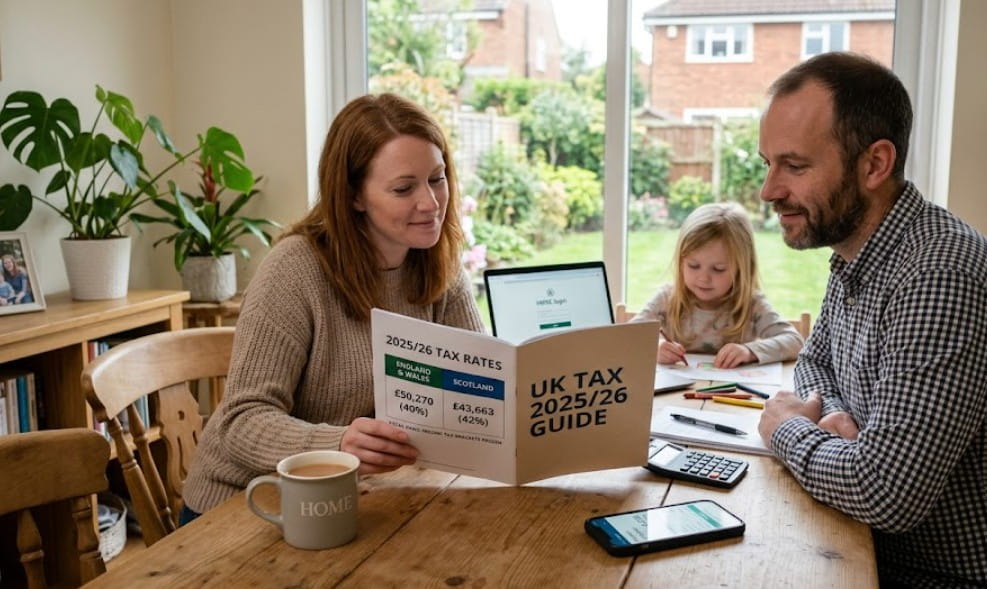
As we enter the 2025/26 financial year, the 40 tax bracket 2025 is a critical threshold for millions of UK workers. Due to a multi-year freeze on tax bands, a phenomenon known as fiscal drag is pushing more households into the 40% higher rate as wages rise with inflation. For the 2025/26 tax year, you start paying 40% tax on earnings over £50,270.
This threshold is frozen until at least April 2028. In Scotland, the Higher Rate starts much lower at £43,663 and the rate is 42%.
What are the UK’s 40 tax brackets for 2025/26?
For the 2025/26 tax year (starting 6 April 2025), the UK income tax thresholds remain largely frozen in England, Wales, and Northern Ireland, while Scotland continues to use its own distinct system of six tax bands.
England, Wales, and Northern Ireland
In these regions, the Personal Allowance (the amount you earn before paying tax) is frozen at £12,570.
The 40% Tax Bracket for 2025 applies to taxable income over £50,270. Because your first £12,570 is tax-free, this 40% rate is technically charged on the slice of your income between £37,701 and £125,140.
Income tax in the UK is a progressive system. You only pay the specific rate on the portion of your income that falls within that specific band, rather than paying one flat rate on your entire salary. This distinction is vital for understanding your marginal tax rate versus your effective tax rate.
| Income Tax Band | Taxable Income Range | 2025/26 Tax Rate |
| Personal Allowance | Up to £12,570 | 0% |
| Basic Rate | £12,571 to £50,270 | 20% |
| Higher Rate | £50,271 to £125,140 | 40% |
| Additional Rate | Over £125,140 | 45% |
Due to the current threshold freeze, House of Commons Library data shows fiscal drag will pull an estimated 1.2 million more workers into the 40% higher rate band by 2026.
Note: The Personal Allowance is tapered away if you earn over £100,000
Common 40% Tax Bracket Misconceptions
It is a common misconception that moving into a higher tax bracket reduces your total take-home pay. In reality, the UK uses a progressive system where only the income within a specific band is taxed at that higher rate.
| Common Myth | Reality |
| If I enter the 40% bracket, all my money is taxed at 40%. | No. Only the portion of your income above £50,270 is taxed at the higher rate. |
| A pay rise to £101k will make me poorer than I was at £99k. | True in some cases. Due to the loss of childcare and the 60% trap, your net position can actually worsen. |
| HMRC automatically fixes my tax code for bonuses. | False. HMRC often overestimates your year-end income based on a single bonus, leading to an incorrect tax code. |
At what point do you pay 40% tax in the UK?
Entering the 40 tax bracket 2025 requires a total taxable income exceeding £50,270 for taxpayers in England, Wales, and Northern Ireland. This threshold is a combination of the frozen £12,570 Personal Allowance and the standard £37,700 basic rate band.
Crossing this specific limit means your marginal tax rate shifts immediately to 40%. Technically, you enter the 40% bracket the moment your taxable income exceeds £50,270. This is calculated by taking the standard Personal Allowance (£12,570) and adding the Basic Rate band (£37,700).
Key Indicators you are nearing the threshold:
- Tax Code 1257L: This is the standard code; if you see this on your payslip and your gross pay is over £4,189 per month, you are a higher-rate taxpayer.
- The Bonus Effect: Mid-year bonuses often push employees into the 40% bracket temporarily. HMRC’s Connect system will usually adjust your tax code in the following months to spread the liability.
Scotland vs. Rest of UK
Taxation for residents in Scotland differs significantly due to the devolved powers of the Scottish Parliament. If you live in Scotland, you are subject to different bands and higher percentages than those living in England, Wales, or Northern Ireland.
| Band | Taxable Income Range | Scottish Rate |
| Starter | £12,571 to £15,397 | 19% |
| Basic | £15,398 to £27,491 | 20% |
| Intermediate | £27,492 to £43,662 | 21% |
| Higher | £43,663 to £75,000 | 42% |
| Advanced | £75,001 to £125,140 | 45% |
| Top | Over £125,140 | 48% |
Data from regional salary shifts suggests that professionals relocating from London to hubs like Edinburgh are often find themselves stung by the immediate jump in the Scottish Higher Rate, which bites harder into their monthly take-home pay than they expected.
Understanding the 60% tax trap
The 60% tax trap is a stealth marginal rate affecting UK residents earning between £100,000 and £125,140. This phenomenon occurs due to the progressive withdrawal of the standard Personal Allowance.
Mitigating this massive financial penalty requires proactive financial planning strategies like making targeted pension contributions via salary sacrifice.
While there is no official 60% tax band, a stealth rate exists for those earning between £100,000 and £125,140. This is due to the withdrawal of the Personal Allowance. For every £2 you earn above £100,000, you lose £1 of your tax-free allowance.

How the Stealth Rate Works?
- For every £2 you earn over £100,000, you lose £1 of your Personal Allowance.
- This means you pay 40% tax on the extra income plus 20% tax on the allowance you just lost.
- The Result: A £10,000 pay rise (from £100k to £110k) leaves you with only £4,000 in your pocket.
Why does the 100K trap matter?
- Loss of Tax-Free Childcare: Once you earn £100,001, you lose eligibility for tax-free childcare and the 30 hours of free childcare for toddlers.
- Marginal Diminishing Returns: For many, the increased stress of a £105k role isn’t worth the negligible increase in net pay compared to a £99k role.
- Pension Tapering: High earners may face restrictions on tax-free contributions, leading many to wonder if the 25% tax-free pension lump sum is under threat in future budgets.
Is the 40% tax bracket changing in 2026?
Current government policy indicates that the 40 tax bracket 2025 and 2026 will remain frozen at £50,271. There is no scheduled inflationary increase for these thresholds until at least April 2028.
This long-term freeze is a deliberate fiscal tool used by the Treasury to increase tax receipts without raising the headline percentage rates.
For the 2026/27 tax year, the fiscal drag effect will likely intensify. As the National Living Wage and general private-sector salaries increase to keep pace with the cost of living, a record number of teachers, nurses, and mid-level managers will find themselves classified as higher-rate taxpayers for the first time in their careers.
The Hidden Pain Points of the 2025 Tax Year
Understanding the UK tax system isn’t just about the numbers; it’s about the real-world friction these thresholds create for families. Two primary pain points currently dominate the landscape:
- The Benefit Cliff-Edge: Earning just £1 over the £100,000 mark can trigger the immediate loss of Tax-Free Childcare, effectively costing a family thousands of pounds overnight.
- The Promotion Penalty: Middle managers often find that a hard-won £5,000 pay rise is largely swallowed by the 40% tax rate and increased National Insurance, leaving them with very little extra reward for their increased responsibility.
Direct Actionable Solutions for 2025
To mitigate the impact of the 40% and 60% rates, consider these steps:
- Salary Sacrifice: Direct bonuses or pay rises into your pension to stay below £50,270 or £100,000.
- Electric Car Schemes: These are deducted from gross pay, lowering your taxable income.
- Marriage Allowance: If your partner earns less than £12,570, you can transfer £1,260 of their allowance to you (saving up to £252).
- Gift Aid: Recording charitable donations extends your Basic Rate band, meaning you pay 20% on more of your money.
High earners and the additional rate threshold
What happens if I earn over £125,140? At this point, your Personal Allowance is completely exhausted. Every pound earned above this threshold is taxed at the Additional Rate of 45% (or 48% in Scotland).
For individuals reaching the £200,000 earnings milestone, the cumulative effect of the additional rate and the total withdrawal of the personal allowance results in a significantly higher effective tax burden.
- Review your current total taxable income, including bonuses.
- Calculate how far you are from the £50,270 or £100,000 thresholds.
- Increase pension contributions via Salary Sacrifice to lower your Adjusted Net Income.
- Check if you are eligible for the Marriage Allowance if one partner earns less than the allowance.
- Ensure all Gift Aid donations are recorded to extend your basic rate band.
- Review company benefits like electric car schemes, which are highly tax-efficient.
- Check your HMRC tax code annually for errors and understand how HMRC collects tax on savings interest to avoid unexpected year-end bills.
Strategic ways to navigate the 2025 tax year
The Bed and ISA process is a highly effective strategy used to minimize UK capital gains tax liabilities. This financial transaction involves selling investments to realize gains up to your annual allowance and immediately repurchasing them inside an ISA wrapper.
Protecting your future investment growth requires utilizing these tax-efficient wrappers annually.
A simple trick for avoiding Capital Gains Tax (CGT) while managing your income is the Bed and ISA process. By utilising your Capital Gains Tax Allowance 2025/26, you can sell assets that have gained value and immediately re-purchase them within a tax-free ISA wrapper.
This effectively resets your cost base and protects future growth from the taxman. When it comes to intergenerational wealth, many ask: Can I gift £100k to my son in the UK? Yes, you can gift any amount.
However, this falls under the 7-year rule for Inheritance Tax (IHT). If you survive for seven years after the gift, it is entirely tax-free. If not, it may be subject to a sliding scale of IHT known as Taper Relief.
Final Summary and Next Steps
Staying ahead of the 40 tax bracket 2025 means you can’t just set and forget your finances. With thresholds stuck in place, the ‘hidden’ tax of fiscal drag is a real drain on your income.
Your next step should be to log into your HMRC Personal Tax Account to verify your estimated income for the 2025/26 year and ensure your tax code accurately reflects your circumstances.
The 40 tax bracket 2025 means a 40% liability on earnings over £50,270 for UK households in 2025/26.
Verified against: HMRC Income Tax Rates 2025/26 and the Scottish Government Budget (Finance No. 2) documentation.
FAQ about the 40 Tax Bracket 2025
At what salary do I pay 40% tax in 2025?
You pay 40% tax once your income tops £50,270. This threshold is reached by combining the £12,570 Personal Allowance with the £37,700 Basic Rate band.
Is a 100k salary in the top 1% in the UK?
No, official ONS tax statistics confirm a £100,000 salary generally places you in the top 3% to 4% of UK earners. To join the top 1, you’d typically need to clear over £180,000 a year.
How does HMRC know if you have gifted money?
HMRC usually discovers large gifts during the probate process after someone passes away. Banks may also report suspicious large transfers, and HMRC has access to Connect, a sophisticated data-matching system.
How much cash can you inherit tax-free in the UK?
The standard Nil Rate Band is £325,000. If the estate includes a main residence passed to direct descendants, this can rise to £500,000, or £1 million for a married couple.
What is the 6-year rule?
HMRC generally has up to four years to correct innocent tax errors, but they can go back six years if they suspect you were careless with your tax affairs or reporting.
What is the 100k trap in the UK?
This refers to the effective 60% tax rate caused by the withdrawal of the £12,570 Personal Allowance for every pound earned between £100,000 and £125,140.
Is the UK the most heavily taxed country in the world?
No. While UK tax as a percentage of GDP is at its highest since WWII, countries like France, Denmark, and Belgium generally have higher overall tax ratios.
