
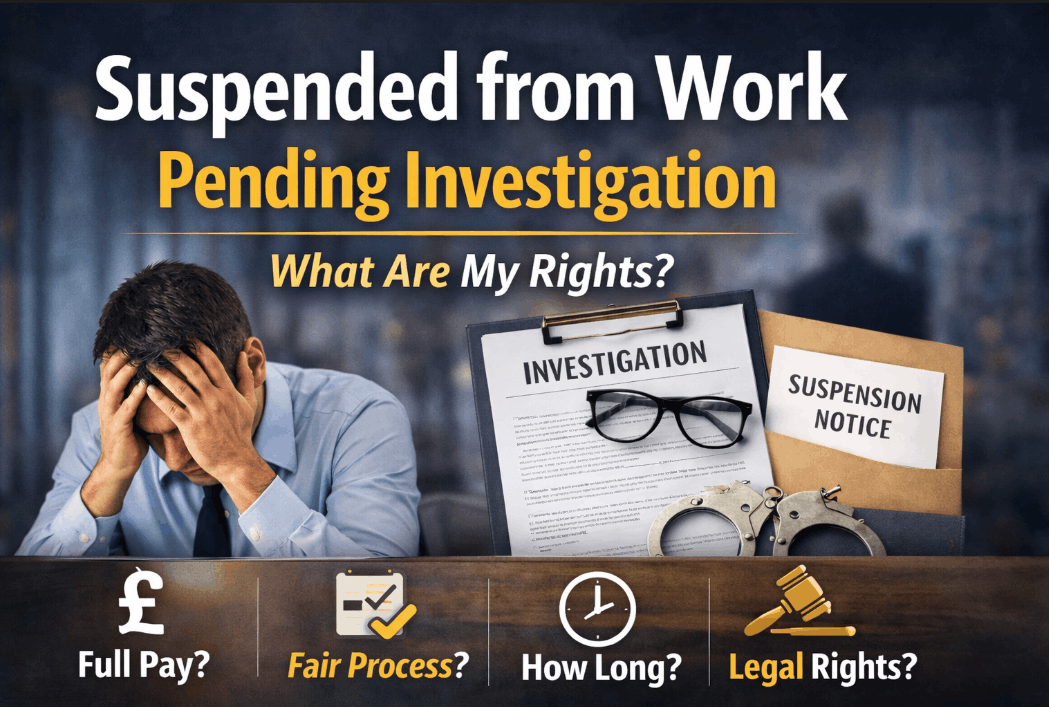
Being suspended from work pending investigation can be an incredibly stressful experience. Many employees immediately ask one core question: What are my rights under UK employment law? While the situation feels disciplinary, it is legally intended to be a protective measure rather than a punishment.
Your Rights if Suspended from Work (UK Quick Answer)
If you are currently facing a workplace suspension, you are entitled to specific legal protections:
- Full Pay: In most cases, you must receive your normal salary and benefits.
- Justification: Suspension must be a reasonable and justified response to the allegations.
- Transparency: You have the right to know the allegations against you in writing.
- Timeliness: The investigation must be fair, impartial, and completed as quickly as possible.
- Neutrality: The act of suspension should not imply guilt or pre-determine a dismissal.
What does suspension pending investigation mean?
In an employment context, this is a period where an employee is temporarily relieved of their duties while the employer gathers evidence regarding potential misconduct. It is used to prevent the risk of witness interference, data deletion, or further incidents while the facts are established.
Legal Basis for Workplace Suspension in the UK
The authority for an employer to suspend you is rooted in several legal frameworks:
- Employment Rights Act 1996: Provides the foundation for fair treatment and protection against unlawful wage deductions.
- ACAS Code of Practice: While not strictly law, Tribunals use these guidelines to determine if an employer acted reasonably.
- Implied Term of Trust and Confidence: Every contract contains an unwritten rule that neither party will act in a way that destroys the working relationship. A knee-jerk or unfair suspension is often a breach of this term.
How do I handle the initial suspension meeting?
The moment you are told you are being suspended is often the most stressful. In practice, this meeting is not a disciplinary hearing, but rather a notification of the process.
| Right/Benefit | Status During Suspension | Notes |
| Basic Salary | Guaranteed | Must be paid in full unless unpaid suspension is in the contract. |
| Pension Contributions | Continued | Employer and employee contributions remain active. |
| Holiday Accrual | Continued | You continue to earn annual leave as normal. |
| Bonuses/Commission | Variable | Depends on the specific wording of your bonus scheme. |
In one recent case, an employee in the financial sector was suspended and blocked from the internal portal. Because they could not meet their sales targets while suspended, the employer had to calculate an average commission to ensure the employee didn’t suffer a financial detriment.
While your immediate focus will be on your monthly salary, a sudden absence from the workplace often triggers wider concerns regarding long-term financial security.
It is worth considering how this period might affect your broader retirement planning, particularly given recent debates around whether the is the 25% tax-free pension lump sum under threat or how a prolonged investigation might impact your future contributions and benefits.
What steps should a fair investigation process follow?
To ensure the process adheres to ACAS guidelines and common law fairness, your employer should follow a structured approach.
- Consider alternatives: Check if the investigation can happen while you are in a different role or working from home.
- Formal notification: Provide a clear explanation of the allegations and why suspension is necessary.
- Written confirmation: Send a letter within one working day outlining the terms and no contact rules.
- Appoint an investigator: Choose a manager not involved in the original incident to remain impartial.
- Set a timeline: Establish a date for the first review of the suspension (usually within 7–14 days).
- Maintain communication: Appoint a point of contact so you aren’t left in total isolation.
- Conduct interviews: Gather evidence from witnesses and review digital or physical records.
- Reach a decision: Determine if there is a case to answer or if the suspension should be lifted immediately.

Typical Timeline of a Workplace Investigation
While every case varies based on complexity, a standard procedural timeline often looks like this:
| Stage | Process | Typical Timing |
| Stage 1 | Suspension notification meeting | Day 1 |
| Stage 2 | Formal written confirmation letter | Day 1–2 |
| Stage 3 | Evidence gathering & witness interviews | Week 1–2 |
| Stage 4 | Formal review of suspension status | Every 14 Days |
| Stage 5 | Notification of investigation outcome | Variable |
Can my employer stop me from speaking to colleagues?
Employers often impose no contact rules to prevent witness intimidation or the collusion of stories. However, you have a right to defend yourself.
A common pattern is for employers to allow contact only through a designated union representative or a specific HR contact.
If you need to speak to a colleague to gather evidence for your defence, you should request this formally through the investigator.
Total isolation can impact your mental health, and as of 2026, employers are under increased scrutiny to satisfy their Duty of Care during this period.
Do you have to stay at home while suspended?
Technically, no. You are not under house arrest. However, you must remain available for work. This means you must be able to attend investigation meetings or return to duty at short notice.
You should seek permission before traveling abroad or going to areas where you cannot be contacted, as failing to attend a meeting could be viewed as a separate disciplinary issue.
Things you should avoid while suspended
To protect your position, avoid the following red flag behaviours:
- Contacting Witnesses: Do not attempt to influence or talk to colleagues involved in the case.
- Discussing the Case Publicly: Avoid posting about the investigation on social media or LinkedIn.
- Deleting Evidence: Never delete emails, messages, or files that might be relevant to the case.
- Ignoring Contact: Ensure you respond to HR or your investigator within a reasonable timeframe.
How long can a work investigation legally last?
There is no fixed statutory limit, but the ACAS Code of Practice states it must be as brief as possible.
- Review Periods: Suspensions should be reviewed fortnightly to see if they are still necessary.
- Unreasonable Delays: If an investigation drags on for months without justification, it may constitute a fundamental breach of contract.
- Evidence Gathering: Simple cases (e.g., a single social media post) should take days; complex fraud cases may take weeks.
From a tribunal perspective, judges often look for evidence of procedural drift, where an investigation is allowed to stall without justification.
What is the difference between suspension and garden leave?
While they look similar, the intent behind them is entirely different.
| Feature | Suspension Pending Investigation | Garden Leave |
| Primary Intent | Investigative / Protective | Notice period / Competitive protection |
| Underlying Tone | Potential misconduct | Usually, resignation or redundancy |
| Returning to Work | Likely if cleared | Unlikely; usually, the end of employment |
| Contract Status | Active (often under stress) | Active (notice period being served) |
What are my rights if I am not being paid during suspension?
Unless your contract of employment explicitly allows for unpaid suspension (which is rare outside of specific industries like construction or certain trade unions), you must be paid. If your employer withholds pay, this is usually an unlawful deduction from wages.
If you find yourself in this position, your first step should be a formal grievance. If the matter isn’t resolved, you may have grounds for an Employment Tribunal claim.
In practice, even if the contract allows for unpaid suspension, it is often viewed as a penalty, which could undermine the fairness of any subsequent dismissal.
Protecting your livelihood in these circumstances requires a firm grasp of the statutory protections available to all staff.
In the same way that specific protocols exist to protect those wondering if I had an accident at work, what are my rights UK, employees facing a procedural suspension must act decisively to ensure their contractual rights are not sidelined during the investigation.
Can I resign while suspended from work?
You can resign at any time, but doing so during a suspension carries risks. If you resign with immediate effect because you feel the suspension is a sham, you might later claim Constructive Dismissal. However, this is a high legal bar to clear.
Consider the experience of a retail manager who was suspended following a minor stock discrepancy. The employer leaked the news to the local press before the investigation started.
The manager resigned, arguing the neutral suspension had been used to destroy their reputation, making a return to work impossible.
Can you be dismissed while suspended from work?
Suspension is not a dismissal. It is a preliminary step. However, if the investigation finds evidence of gross misconduct, the employer will move to a formal disciplinary hearing.
You can only be dismissed after this hearing has taken place and you have been given the opportunity to state your case. A summary dismissal (firing on the spot) during a suspension without a hearing would likely lead to a successful claim for Unfair Dismissal.

FAQ
Can I take another job while suspended?
No, as you remain under contract and must stay available for investigative interviews. Most contracts also have exclusive service clauses preventing outside work without permission.
Do I have the right to be accompanied to the suspension meeting?
While the statutory right to be accompanied technically only triggers at the disciplinary stage, ACAS recommends allowing a companion as best practice to support the employee’s well-being.
What happens if I get sick during my suspension?
You should report your illness following the company’s usual sickness policy. Usually, you will move from suspension pay to Statutory Sick Pay (SSP) or Company Sick Pay, depending on your contract.
Can I go on holiday while suspended?
You must request leave as normal. If your employer approves it, they will deduct it from your entitlement. You cannot simply go away without notice as you must be available for investigation meetings.
Will a suspension show on a future reference?
Factual references rarely mention suspensions; they typically confirm only your start date, end date, and job title.
Can my employer search my personal phone during the investigation?
Only if there is a clear policy or you give consent. Employers can usually search company-owned devices, but searching private property without a very strong legal reason is a breach of privacy.
Can you leave the house during suspension?
Yes, you are free to leave your home. Your only obligation is to be available during your normal working hours to answer calls from your employer or attend scheduled investigation meetings.
What if the allegations are proven false?
The suspension is lifted, and you should return to work. Your employer should discuss how to manage your reintegration and how to explain your absence to colleagues without breaching your privacy.
Can suspension damage your career?
If the investigation is dropped, the suspension is removed from your record. However, the social impact in the workplace can be difficult. Employers have a duty to manage your return sensitively to avoid reputational damage.
Can suspension last for months?
It should not. ACAS guidelines state that it must be kept as short as possible. If a suspension lasts several months without a clear reason or regular reviews, it may constitute a breach of contract, allowing for a constructive dismissal claim.
Securing your position: A checklist for the weeks ahead
If you have been suspended, your priority is to remain calm and document everything. Ensure you have a copy of your employment contract and the staff handbook. Check your latest payslip to ensure your pay remains status quo.
If the investigation exceeds two weeks without a clear update, send a formal letter requesting a timeline. If you feel the process is biased or the no contact rule is preventing you from accessing vital evidence, consider speaking to a qualified representative or ACAS for early conciliation advice.