
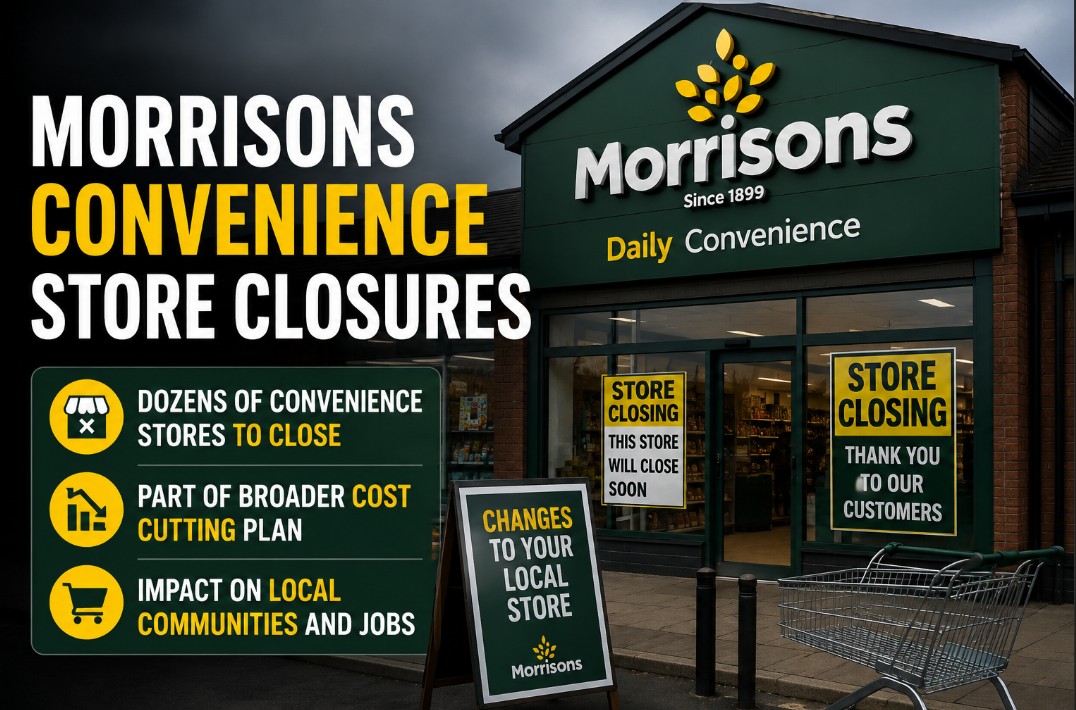
As of 2026, Morrisons Convenience Store Closures approximately 100 loss-making, company-managed local shops across the UK, specifically targeting underperforming branches within its high street convenience network.
This targeted consolidation aims to eliminate persistent operating deficits exacerbated by rising statutory employment costs, while shifting the brand’s long-term growth focus toward a low-overhead, asset-light independent franchise model.
Why are Morrisons Convenience Store Closures happening in 2026?
Morrisons convenience store closures in 2026 stems due to an unsustainable misalignment between escalating corporate operating overheads and poor localized branch revenues.
Years of structural losses at select small-format units became impossible to reverse following recent macroeconomic shifts and regulatory cost shocks.
Following a comprehensive operational review, corporate leadership confirmed that these underperforming outposts will be phased out over the coming months.
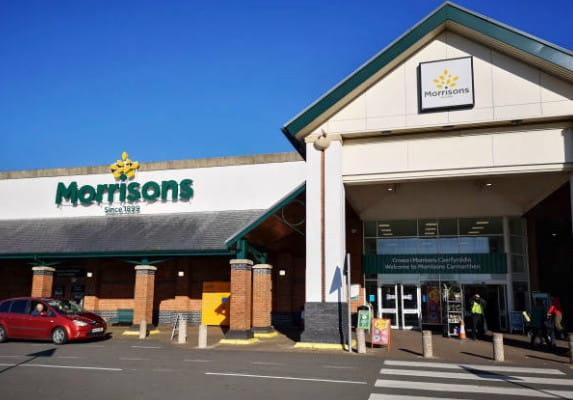
The Avalanche of Costs From Recent UK Government Policy
UK government policies forced Morrisons convenience store closures by spiking non-discretionary operational overheads via three primary triggers: increased employer National Insurance Contributions (NICs), consecutive National Living Wage hikes, and expensive Extended Producer Responsibility (EPR) packaging levies.
- National Insurance Contributions: Recent hikes in employer National Insurance Contributions (NICs) have directly increased payroll costs for labor-intensive, extended-hour local shops.
- National Living Wage Adjustments: Successive mandatory increases to the statutory minimum wage have driven up base operational expenses across all company-managed estates.
- Extended Producer Responsibility Regulations: New packaging recycling levies and compliance frameworks have added significant administrative and financial weight to grocery supply chains.
In an official corporate communication detailing the operational review, a spokesperson for the supermarket group noted that the underlying trading difficulties had been heavily exacerbated in recent months by significant cost increases resulting from government policy choices, which made returning these structurally challenged stores to profitability an unviable goal.
The Weight of Private Equity Debt Post-CD&R Takeover
Beyond universal high street cost pressures, Morrisons carries distinct financial liabilities linked to its corporate ownership structure.
Following the £10 billion private equity buyout by US-based firm Clayton, Dubilier & Rice (CD&R) five years ago, the supermarket chain was leveraged with substantial debt obligations.
Is Morrisons American-owned?
Morrisons is ultimately controlled by an American company, the US-based private equity firm Clayton, Dubilier & Rice (CD&R), which completed a £10 billion leveraged buyout of the grocer. However, day-to-day retail operations remain anchored at its UK headquarters in Bradford.
How Much Debt Does Morrisons Have?
Morrisons has a net debt of £3.2 billion as of 2026, down from its historic post-takeover peak. Despite successful reduction efforts through asset sale-and-leaseback deals, the company still paid a massive £281 million in net debt interest over the last financial year.
Consequently, the business cannot afford to subsidize chronically unprofitable branches, leaving the grocer with little choice but to press ahead with its current convenience store closure program.
Which Locations Are Impacted by the Morrisons Daily Closures?
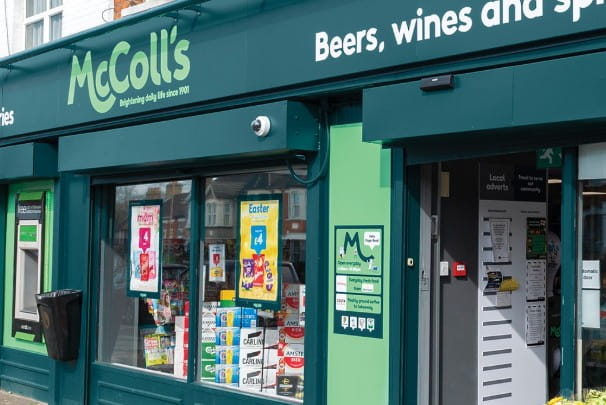
The locations impacted by the 2026 Morrisons Daily closures are exclusively underperforming legacy McColl’s stores. The closures isolate a specific subset of company-managed convenience units plagued by unviable geographic placement, low local footfall, or heavy regional competition.
Determining which Morrisons stores are closing requires an examination of the retailer’s previous corporate acquisitions.
The consolidation is not an arbitrary reduction across its entire network; rather, it isolates a specific, legacy segment of the estate that has struggled to adapt to modern convenience trading.
The Legacy McColl’s Connection
Every single one of the 100 convenience locations earmarked for closure in the May 2026 wave originates from the retailer’s rescue acquisition of the collapsed convenience operator McColl’s, a trend of high-street turbulence that has affected other major retailers, as seen in the recent UK toy chain store closures.
In 2022, Morrisons outbid rival supermarket groups to acquire 1,164 McColl’s branches out of administration for £190 million.
While the vast majority of these properties were successfully revitalized and converted into thriving neighborhood hubs, a specific subset was structurally constrained by poor geographic placement, low local footfall, or oversaturated regional competition.
These 100 branches represent the most challenged portion of that legacy McColl’s acquisition. Despite significant capital investment in store formatting, inventory updates, and visual rebranding under the Morrisons Daily UK banner, these specific locations failed to achieve baseline profitability.
Differentiating the Company-Owned Estate from Franchises
Independent franchise-operated Morrisons Daily locations are 100% exempt from the 2026 closures. Only company-managed properties are shutting down, while the independent franchise partnerships segment continues to undergo accelerated corporate expansion across the UK.
For worried shoppers trying to find out if their local Morrisons Daily is closing down, it helps to understand how the convenience division is split.
Out of Morrisons’ total convenience footprint of approximately 1,700 locations, the estate is divided into two distinct operating models: company-managed properties and independently owned franchise partnerships.
| Operational Attribute | Company-Managed Locations (~1,000 Stores) | Independent Franchise Partnerships (~700 Stores) |
| Lease & Property Liability | Held directly by WM Morrison Supermarkets | Held by a third-party operator or an independent owner |
| Staffing & Payroll Risk | Subject to corporate wage & NIC obligations | Managed locally by the independent franchisee |
| 2026 Closure Vulnerability | Contains the 100 earmarked closure sites | 100% exempted from the closure program |
| Strategic Growth Directive | Frozen / Undergoing strict cost consolidation | Accelerated expansion with hundreds of planned openings |
Crucially, these 100 closures are strictly confined to the company-managed segment of the network. Franchise operations, which include hundreds of independently run sites located on third-party petrol forecourts, transport hubs, and local developments, remain highly profitable, fully operational, and central to the brand’s forward strategy.
What Morrisons Employee Issues and Redundancies Are Arising?
The Morrisons convenience store closures trigger widespread redundancy consultations for hundreds of workers.
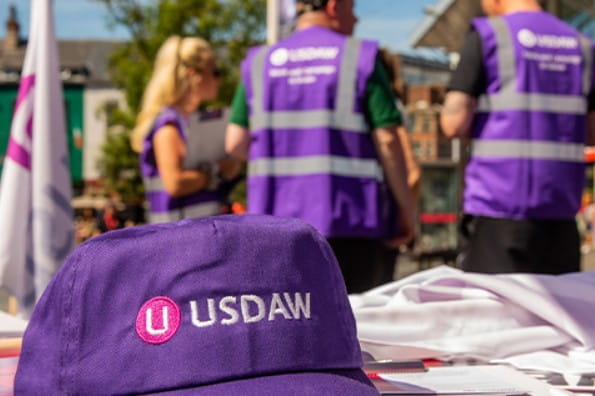
To minimize job losses, Morrisons is using a collective internal consultation process with the Usdaw union to offer redeployment routes into flagship supermarkets, remaining local hubs, or logistics supply chains.
A restructuring program of this scale inevitably triggers widespread workforce uncertainty, requiring extensive coordination to manage redundancies and minimize job losses.
Redundancy Rights, Consultations, and the Usdaw Union Role
Following the formal announcement of the closure plan, Morrisons initiated a comprehensive consultation process involving affected store personnel, supervisory staff, and representatives from the Union of Shop, Distributive and Allied Workers (Usdaw).
Large-scale redundancy processes require a mandatory collective consultation period to explore alternatives to job losses and establish clear guidelines for employee exit packages.
Under UK employment legislation, large-scale redundancy processes require a mandatory collective consultation period to explore alternatives to job losses and establish clear guidelines for employee exit packages.
To minimize compulsory redundancies, Morrisons has committed to an internal redeployment framework. In practice, when a local branch closes, affected workers are systematically audited for skills matching and offered priority placement within alternative areas of the corporate infrastructure.
Employees impacted by the convenience closures can follow three potential paths:
- Flagship Supermarket Integration: Transitioning into open floor positions within larger, main-estate Morrisons supermarkets within a reasonable commuting radius.
- Convenience Hub Realignment: Moving to stable, high-performance company-managed Morrisons Daily outposts nearby.
- Vertical Supply Chain Placement: Redeployment into Morrisons’ proprietary food manufacturing plants, preparation facilities, or regional logistics hubs.
While this mitigation strategy provides a viable fallback for staff in dense urban environments, localized labor data shows that workers in isolated or rural legacy McColl’s branches face geographical limitations.
If there is no alternative Morrisons facility within a viable distance, commuting costs often render redeployment logistically unfeasible, resulting in localized job cuts.
Head Office Redundancies
These branch closures coincide with a parallel cost-cutting drive at the retailer’s corporate headquarters. They follow an extensive operational reorganization at the retailer’s corporate headquarters, Hilmore House in Bradford.
In April 2026, Morrisons announced a major central corporate restructuring that placed approximately 200 head office roles, roughly 8% of the headquarters workforce, at risk of redundancy.
This corporate downsizing was explicitly driven by a long-term transformation program to replace manual administrative tasks with automated business intelligence systems and artificial intelligence tools.
Corporate Restructuring Timeline (2025–2026)
- November 2025: Announcement of 145 multi-format closures (Cafés, Counters, Pharmacies)
- March 2026: Convenience division commercial functions merged into the Central Retail Division.
- April 2026: 200 head office roles placed at risk via AI & automation drive at Hilmore House
- May 2026: Breaking announcement of 100 loss-making convenience store closures
This corporate shift directly restructured how the convenience network is governed. Following the departure of the wholesale and convenience director, Morrisons dismantled its standalone convenience commercial team.
The commercial, buying, and support infrastructure for small-format stores was integrated into the main centralized grocery division under Group Retail Director Martin Dawson and Group Trading Director Andrew Staniland.
By eliminating duplicate corporate management layers and merging store operations into a single team structure, the retailer extracted immediate central efficiencies, paving the way for the physical closure of the underperforming stores it monitored.
Where Does Morrisons Stand in the Big 4 Supermarket Rankings?
As of 2026, Morrisons ranks 5th in the UK grocery market with an 8.4% market share, trailing behind Aldi. The traditional Big Four hierarchy has been permanently disrupted by the aggressive, capital-backed high street expansion of discount chains.
The structural necessity of closing unprofitable outposts is underscored by Morrisons’ current competitive standing within the UK grocery sector.
Historically a fixed member of the industry’s traditional Big Four market leaders alongside Tesco, Sainsbury’s, and Asda, Morrisons experienced an intense competitive squeeze over the past four years.
The aggressive, capital-backed expansion of European discount giants, most notably Aldi, successfully disrupted this hierarchy.
| Supermarket Chain | UK Market Share (2026) |
| Tesco | 27.6% |
| Sainsbury’s | 15.2% |
| Asda | 12.8% |
| Aldi | 10.1% |
| Morrisons | 8.4% |
This focus on fiscal consolidation is delivering slow but visible stabilization. In its latest financial reporting period, Morrisons’ annual losses narrowed by £33 million, bringing the total net loss down to £318 million.
Pruning the bottom 100 loss-making convenience branches is seen by retail analysts as a vital tactical manoeuvre to accelerate this bottom-line recovery and protect the core supermarket business.
Summary and Actionable Outlook
The confirmation of these 100 Morrisons convenience store closures marks a definitive tactical shift for the supermarket group.
By systematically liquidating the most unprofitable, company-managed local outlets inherited from the McColl’s acquisition, the business is directly insulating its balance sheet from the compounding pressures of high street operational costs and private equity debt service.
For affected retail employees, immediate priority must be placed on tracking the collective consultation timeline alongside Usdaw representatives to secure preferred local redeployment routes.
This report is verified against official corporate restructuring announcements from WM Morrison Supermarkets, statutory UK employment policy frameworks, and official trade union statements from USDAW.
FAQ about Morrisons convenience store closures
Why is Morrisons closing convenience stores in 2026?
Morrisons is closing 100 convenience stores because they have run at a persistent loss for several years. This structural underperformance was made unsustainable by sharp increases in statutory employment costs, including higher employer National Insurance Contributions and minimum wage hikes.
Is Morrisons still British-owned or is it completely American-owned now?
Day-to-day corporate operations remain based at Hilmore House in Bradford, UK. However, the ultimate controlling ownership belongs to the American private equity firm Clayton, Dubilier & Rice (CD&R), which purchased the supermarket chain for £10 billion in a leveraged buyout.
How many stores does Morrisons currently have in the UK?
Morrisons maintains a retail footprint of approximately 1,700 convenience stores alongside a core network of nearly 500 large-scale flagship supermarkets positioned across England, Scotland, and Wales.
Are the main Morrisons supermarkets, cafes, or pharmacies affected by this May 2026 announcement?
No. This specific May 2026 announcement is strictly confined to the 100 company-managed local convenience branches. It does not alter the trading status of standard supermarkets or the remaining in-store café and pharmacy infrastructure.
What should Morrisons Daily staff do regarding redundancy and redeployment?
Impacted employees should engage directly with their branch managers and Usdaw union representatives during the formal consultation window. Morrisons has committed to offering eligible staff alternative positions within nearby supermarkets, manufacturing sites, or distribution networks.
Are franchise-operated Morrisons Daily branches closing down?
No. Independent franchise locations, such as those operated in partnership with petrol forecourts or local independent retailers, are completely insulated from this closure wave and continue to expand through a robust growth framework.
How does Morrisons’ debt impact its local high street stores?
The heavy debt burden inherited from the CD&R private equity takeover requires substantial annual interest payments, which reached £281 million last year. These fixed financing charges leave the company with minimal liquidity to subsidize unviable local branches.
