
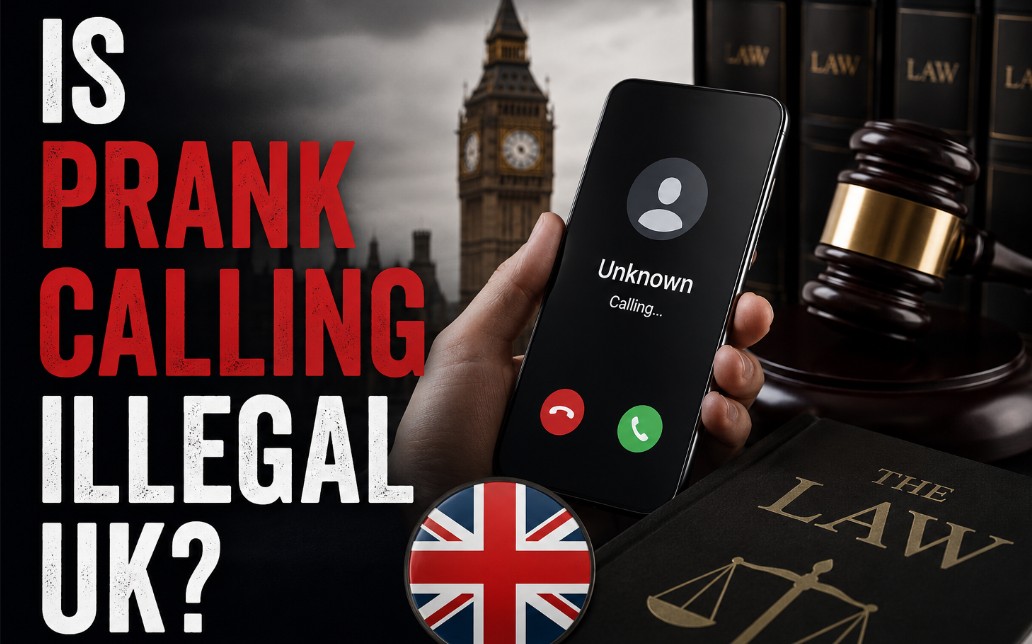
Yes, prank calling is illegal in the UK if the communication is intended to cause annoyance, inconvenience, anxiety, or distress.
Under Section 127 of the Communications Act 2003 and the Malicious Communications Act 1988, any phone call that crosses the threshold into harassment, commercial disruption, or hoax reporting is a prosecutable criminal offence.
Key Fact
- This article explains the legal status of nuisance, hoax, and prank telephone calls across England, Wales, Scotland, and Northern Ireland.
- The text breaks down real prosecutions under the Communications Act 2003, the Malicious Communications Act 1988, the Protection from Harassment Act 1997, and the Online Safety Act 2023.
- Offenders can face severe legal consequences, including unlimited financial fines and custodial prison sentences ranging from 6 months to 2 years.
Is Prank Calling Illegal UK?
Yes, prank calling is illegal in the UK if the call is intended to cause annoyance, inconvenience, anxiety, or distress. While the phrase prank call is not a specific statutory crime by name, any telephone call that results in harassment, financial loss, or psychological harm is prosecuted as a criminal offence.
The nature and impact of the call dictate its legality. If a phone call causes anxiety, distress, or financial disruption, it crosses the line from a harmless prank into criminal territory. The UK legal system does not view it as just a joke as a valid legal defence.
What is Considered a Prank Call?
A prank call is legally defined as any unwanted telephone communication utilizing deception or trickery for the caller’s amusement. The legal system differentiates a harmless prank from a criminal offence based on three objective criteria: the caller’s intent, the frequency of the calls, and the psychological or economic impact on the recipient.
The law looks past the humorous label and evaluates the interaction based on these objective criteria. The table below outlines how a standard interaction transforms into a legal issue:
| Feature | Harmless Interaction | Potential Criminal Offence |
| Intent | Mutual amusement | To cause distress, alarm, or anxiety |
| Frequency | Isolated occurrence | Persistent, repeated, or targeted |
| Content | Light-hearted, non-threatening | Obscene, menacing, or false reports |
| Impact | None | Disruption, fear, or waste of resources |
When Is Prank Calling Illegal UK?
A prank call becomes illegal in the UK the moment it crosses the legal threshold into harassment, menace, or malicious communication.
Under UK law, a call is criminal if it features grossly offensive language, forms a persistent pattern of targeted annoyance, relays false panicking information, or continues after the recipient requests it to stop.
Specifically, a joke call is deemed illegal when:
- The content of the call is grossly offensive, indecent, or threatening.
- The calls are persistent and targeted, forming a course of conduct designed to annoy or distress someone.
- The caller relays false information that causes panic or financial loss (such as fake delivery or emergency claims).
- The recipient has explicitly asked the caller to stop, and the caller continues.
Which UK Laws Cover Prank Calls as Illegal?
Prank calls are prosecuted in the United Kingdom under three primary pieces of legislation: Section 127 of the Communications Act 2003, the Malicious Communications Act 1988, and the Protection from Harassment Act 1997.
Together, these statutes criminalize sending menacing, offensive, or persistent electronic communications. If you make a malicious prank call, you can be prosecuted under:
- Section 127 of the Communications Act 2003: This is the primary statute used. It prohibits sending public electronic communications that are grossly offensive, indecent, obscene, or of a menacing character.
- The Malicious Communications Act 1988: This covers sending communications (including phone calls or messages) with the specific intent to cause distress or anxiety to the recipient.
- The Protection from Harassment Act 1997: If a person makes multiple prank calls to the same individual or business, it establishes a pattern of behaviour that satisfies the legal definition of harassment or stalking.
What Type of Prank Calls Are Illegal?
The specific types of prank calls classified as illegal in the UK include hate-motivated calls, threatening or menacing messages, silent calls designed to induce fear, and calls causing commercial disruption.
All of these categories carry severe criminal penalties because they target a victim’s safety or business operations. Not all prank calls are treated equally. The legal system looks severely upon specific categories of deceptive or malicious calls:
- Hate-Motivated Calls: Any call targeting someone’s race, religion, sexual orientation, or disability with offensive language.
- Menacing or Threatening Calls: Threatening physical harm, property damage, or blackmailing the recipient.
- Commercial Disruption: Calling businesses (like McDonald’s, local restaurants, or independent shops) to place massive fake orders or tie up lines, causing direct economic impact.
- Silent Calls: Intentionally calling someone repeatedly and staying silent to cause psychological distress or fear.
Is Prank Calling 999 Illegal?
Yes, prank calling 999 is strictly illegal under UK law and carries a maximum penalty of an unlimited fine and up to six months in prison. Calling emergency services with a hoax or fake report is treated with zero tolerance by UK police forces due to the direct risk it poses to public safety.
Is Prank Calling Restaurants or Businesses Illegal UK?
Yes, prank calling restaurants or businesses in the UK is illegal and can be prosecuted as criminal harassment or commercial disruption.
Intentionally tying up business lines or placing fake orders causes immediate economic damage, prompting police forces to investigate these actions under the Protection from Harassment Act 1997.
- Business Disruption: Calling restaurants, such as McDonald’s or independent shops, to provide false information or cause distraction interferes with their ability to serve legitimate customers.
- Legal Consequences: If a business reports the incident as harassment, the perpetrator may face investigation under the Protection from Harassment Act 1997.
- Economic Impact: Repeated prank calls can lead to financial losses for small businesses, prompting police to treat such patterns as a course of conduct, which is a key element of stalking or harassment charges.
What Age Can You Face Prosecution for Prank Calls in the UK?
In the UK, individuals can face criminal investigation and prosecution for illegal prank calls starting at the age of 10, which is the age of criminal responsibility in England, Wales, and Northern Ireland. Minors under 18 are dealt with via Youth offending teams and can receive youth cautions or community sentences.
While younger teenagers often perform prank calls as peer-group jokes, the law applies to anyone past the age of 10.
For minors under the age of 18, penalties may differ from adult sentences, but the resulting criminal record can still fundamentally restrict future employment, university applications, and international travel options.
What Happens if You Make a Prank Call?
The consequences of making a prank call depend on the severity of the act and the target involved. While minor incidents might result in a warning, serious breaches carry life-altering penalties.
- Police Investigation: Victims report the incident, leading to a trace of the caller ID or coordination with network providers.
- Evidence Collection: Authorities log the time, frequency, and content of the calls to establish a pattern of behaviour.
- Initial Contact: Police may issue a formal warning or caution for first-time offenders who show remorse.
- Prosecution: If the behaviour is severe or persistent, the Crown Prosecution Service (CPS) may initiate criminal proceedings.
- Fines: Magistrates can impose substantial financial penalties for communications offences.
- Criminal Record: A conviction results in a permanent criminal record, which can impact employment opportunities and background checks.
- Custodial Sentence: In extreme cases, particularly involving emergency services, offenders face potential prison time.
Can Prank Calls Be Traced?
Yes, all prank calls can be traced by UK law enforcement, even if the caller uses a withheld number, a spoofing application, or a digital VoIP service.
Telecommunications providers are legally mandated to store network logs, allowing police to track calls back to a specific smartphone IMEI or residential address.
Even when using withheld numbers or spoofing applications, police have the technical capacity to work with major telecommunications entities to identify the source of the calls.
In practice, the digital footprint left by a smartphone or internet-based calling service often provides sufficient data to track an individual back to their specific hardware or residential address.
How to Handle Harassment and Report Prank Calls?
To report illegal prank calls in the UK, document the date, time, and length of every call, block the offending number using your device’s interface, and contact the police via the 101 non-emergency number if the call contains direct threats to your life or immediate safety; dial 999 immediately.
If you are receiving unwanted or malicious calls, taking proactive steps is necessary to protect your privacy and safety.
- Document Everything: Keep a detailed log of the date, time, and duration of every call received.
- Use Existing Tools: Enable call blocking features on your smartphone or contact your service provider to activate nuisance call filtering.
- Report to Authorities: If the calls are threatening, contact the police via the 101 non-emergency number to report the behaviour.
- Emergency Contact: Only use 999 if there is an immediate threat to life or safety; never use this line for anything other than genuine emergencies.
Summary
Understanding that prank calling is not a benign activity is the first step toward responsible digital citizenship. If you find yourself in a situation involving malicious communication, keep records, block contact, and involve the police if the behaviour persists.
Avoiding these actions entirely is the only way to ensure you do not inadvertently trigger a police investigation or accumulate a criminal record that could affect your future.
FAQ
Is it legal to call random people?
While calling a random number is not inherently illegal, doing so repeatedly to cause annoyance or distress constitutes harassment. If the recipient asks you to stop and you continue, it becomes a criminal issue.
Do police take prank calls seriously?
Yes, especially when they involve emergency service lines or targeted harassment of individuals and businesses. The police allocate resources to track persistent offenders to prevent the waste of public time and protect victims.
Can you go to jail for prank calling?
Yes. Under the Communications Act 2003, severe cases of malicious communication can result in custodial sentences. This is particularly common if the prank involves hoaxes directed at emergency services or persistent harassment.
Can you get fined for prank calling?
Yes. Courts can issue significant fines for offences related to malicious communications. The amount varies based on the severity of the act, the harm caused, and the defendant’s previous history with the law.
Is prank calling McDonald’s illegal?
Yes, if the call is intended to disrupt business, cause distress, or is part of a pattern of harassment. Such actions waste staff time and resources, often leading to police involvement under harassment legislation.
What should I do if I am being prank called?
Avoid engaging with the caller, as this often encourages further contact. Block the number, document the incidents, and report persistent harassment to your network provider and the police via the non-emergency 101 line.
Is prank calling a crime?
Prank calling is not a legal term. The act is assessed under laws regarding malicious communications and harassment. If the call causes distress or disrupts services, it is treated as a criminal offence.
