
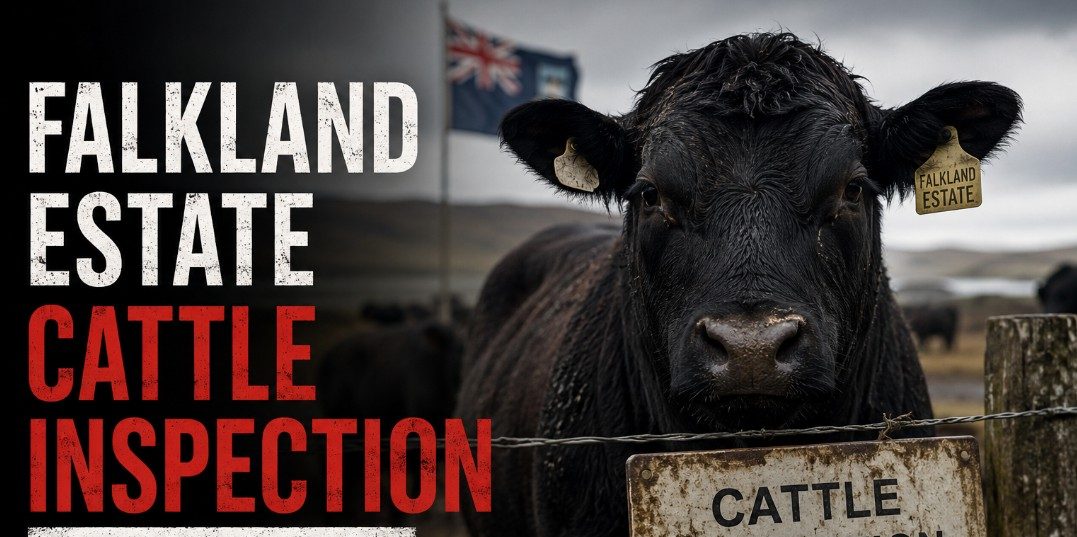
The official Falkland Estate cattle inspection breach resulted in a Scottish Government mandate to humanely slaughter 271 cross-bred Aberdeen Angus and Belted Galloway cattle.
Because the animals lacked verifiable identification tags and trace history, they were permanently barred from the food chain to preserve national biosecurity standards.
The administrative breakdown at Home Farm in Fife represents one of the most severe regulatory crises in the modern Scottish livestock sector.
What is the Background of the Falkland Estate?
The Falkland Estate is a historic agricultural and conservation property located in Fife, Scotland. While the land assets are held by the Falkland Estate Trust, the independent agricultural operations are managed by Falkland Rural Enterprises Ltd, chaired by Ninian Stuart.
The estate’s agricultural wing manages diverse holdings, with a heavy operational focus on heritage and commercial cattle breeds at Home Farm. As a prominent corporate entity in the Scottish rural economy, the estate is subject to strict statutory management requirements monitored by national agricultural authorities.
What Caused the Falkland Estate Cattle Inspection Breach?
The Falkland Estate cattle inspection breach was caused by systemic internal record-keeping failures by Falkland Rural Enterprises Ltd.
A routine audit by the Scottish Government’s Rural Payments and Inspections Division (RPID) revealed that 271 cattle lacked mandatory dual ear tags and matching passport records on the national ScotEID tracking database.
Falkland Rural Enterprises Ltd, the corporate entity managing the agricultural operations, acknowledged that the crisis stemmed from internal management failures and systemic administrative oversight rather than animal cruelty.
Livestock tracking errors accrued over an extended period, meaning the birth, parentage, and movement histories of these specific animals could not be verified against the national ScotEID database.
When individual management tracking breaks down completely, statutory instruments leave regulators with no choice but to isolate the unregistered livestock under official Scottish Government RPID Enforcement Guidelines.
Why Does an Agricultural Traceability Failure Require a Mass Cull?
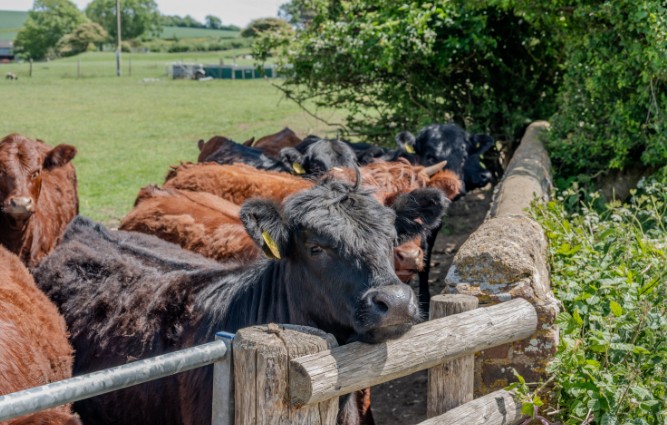
The Falkland estate cattle inspection breach underscores a fundamental rule of UK agricultural governance: absolute traceability is non-negotiable.
British food safety tracking systems rely entirely on the ability to trace every single bovine animal from birth to the slaughterhouse, serving as the primary frontline defence against catastrophic national disease outbreaks.
The Legacy of Biosecurity Enforcement
The stringency of modern Scottish tracking systems is rooted in the legacy of past agricultural crises, specifically the Bovine Spongiform Encephalopathy (BSE or Mad Cow Disease) outbreak of the 1980s and 1990s, and the 2001 Foot and Mouth disaster.
To protect both public health and international trade markets, the Scottish Government enforces a zero-tolerance policy regarding untraceable meat entering the human food supply chain.
When an animal cannot be identified, its health history, vaccination record, and potential exposure to infectious agents like Bovine Viral Diarrhea (BVD) remain completely unknown.
Consequently, the Scottish Government issues an immediate and permanent movement restriction order. This order legally isolates the herd, trapping the operator in an unsustainable position where the animals can never be sold, moved to another holding, or processed for food.
What is the Statutory Appeal Process for RPID Enforcement Orders?
Agricultural operators in Scotland can appeal an RPID enforcement order through the Scottish Government’s formal two-stage agricultural appeals process or via judicial review.
However, if the baseline statutory requirement for tracing identity cannot be legally satisfied, permanent movement restrictions are rarely overturned.
When faced with a permanent movement restriction or a forced cull notice, farm businesses have a limited statutory window to challenge the decision.
The formal process requires submitting comprehensive documentary evidence to prove an administrative or inspector error occurred during the audit.
- Stage 1 Review: An internal assessment conducted by a senior RPID officer not involved in the initial inspection. This review looks for technical misapplications of Statutory Management Requirements.
- Stage 2 Independent Panel: If Stage 1 fails, the case can be kicked up to an independent Agricultural Appeals Panel. The panel evaluates whether the penalty matches the level of administrative non-compliance.
- The Compliance Reality: In cases where there is a total absence of tracking documents, historical logs, or physical identifiers for a massive chunk of a herd over multiple seasons, panels consistently uphold the regulator’s decision to preserve biosecurity integrity.
What Are the Financial and Regulatory Penalties Facing the Falkland Owner?
The economic consequences of the Falkland estate cattle inspection breach extend far beyond the immediate loss of livestock assets. Industry analysts estimate the direct market valuation of the culled Aberdeen Angus and Belted Galloway herd at approximately £500,000.
Because the culling was forced by regulatory non-compliance rather than an active disease eradication programme, Falkland Rural Enterprises Ltd receives zero government compensation for the destroyed animals.
| Financial Risk Category | Standard Regulatory Expectation | Falkland Estate Breach Outcome | Long-Term Commercial Impact |
| Livestock Asset Value | Capital realization via commercial food chain sales. | Total loss of 271 cattle via mandatory humane slaughter. | Immediate write-off of an estimated £500,000 in herd value. |
| Operational Costs | Standard operational overheads offset by market returns. | Estate must pay all slaughterhouse and specialized disposal fees. | Significant unbudgeted cash-flow drain on the agricultural business. |
| Government Subsidies | Receipt of Basic Payment Scheme (BPS) support funds. | Cross-compliance investigation regarding SMR 7 violations. | Potential reduction or 100% cancellation of state agricultural funding. |
In practice, a cross-compliance failure of this magnitude triggers severe financial penalties through the reduction of direct farm support payments.
Under Statutory Management Requirement 7 (SMR 7), which covers cattle identification and registration, the Scottish Government can reduce or completely withhold an operator’s annual subsidy allocations based on the intent or negligence behind the breach.

How Herd Management Lapses Impact Cattle Welfare?
Herd management lapses compromise cattle welfare by triggering sudden, large-scale regulatory interventions.
Permanent movement restrictions force elevated handling, isolation for database scanning, and premature lifecycle termination, which severely disrupt established herd dynamics, social hierarchies, and familiar routines.
Cognitive Complexity and Bovine Behaviour
Research in livestock psychology shows that cattle are highly social animals with complex cognitive capacities. Both Aberdeen Angus and Belted Galloway breeds possess strong spatial memory and the ability to recognize individual human faces over long periods.
- Emotional Capacity: Cattle experience distinct emotional states; they can exhibit signs of visible satisfaction when their environmental needs are met and express profound anxiety when isolated from their established social hierarchies.
- Attachment to Keepers: Regular interaction with consistent stockmen allows cattle to form clear attachments to their handlers, relying on familiar voices and predictable routines to maintain low stress levels during yarding and health checks.
- Social Loneliness: Bovines are herd-centric; a single cow separated from its peers or placed into an unstable social group will exhibit elevated cortisol levels, showing clear physiological signs of loneliness and distress.
When administrative record-keeping breaks down at a corporate or company level, the downstream effects directly compromise these animal dynamics.
The enforcement of a permanent movement restriction necessitates increased handling, isolation for veterinary scanning, and ultimately, the premature termination of the herd’s lifecycle.
A breakdown in database compliance is never just a paperwork error—it introduces severe operational instability that directly impacts the welfare of animals capable of feeling stress, building social bonds, and reacting to human handling.
What Lessons Can Agricultural Corporate Governance Learn from Fife?
The operational failure at Home Farm serves as a critical warning for agricultural landowners, institutional trustees, and farm managers across the United Kingdom.
It demonstrates that agricultural compliance cannot be treated as a secondary administrative task or left entirely reliant on the unverified habits of a single stockman or farm manager.
Implementing Robust Internal Controls
To insulate an agricultural business from devastating statutory enforcement, executive management teams must implement independent oversight systems that treat tracking data with the same rigour as financial accounting.
When reviewing corporate governance failures in the agricultural sector, a common pattern is the complete decoupling of executive estate boards from daily cattle passport management.
To prevent operational drift, businesses must establish routine internal audits where cattle tags are physically cross-matched against digital database logs by an independent third party.
Technical Framework for Maintaining Herd Compliance
To ensure absolute alignment with UK livestock laws, agricultural managers must enforce a structured, chronological workflow for every animal born on or moved onto a holding. The following sequential process represents the minimum legal standard required to protect an enterprise from registration failures.
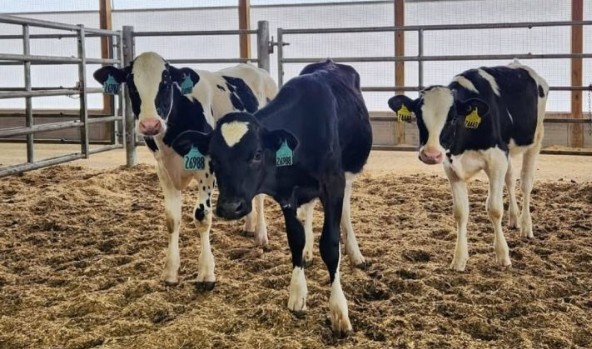
- Primary Physical Identification: Apply official, approved dual ear tags (one primary yellow tag, one secondary tag) to the calf’s ears, ensuring the unique identification number is clearly legible.
- Internal Barn Record Logging: Enter the calf’s birth date, sex, breed, dam’s identification number, and tag code into the physical or digital farm holding register.
- Official Passport Application: Submit a formal cattle passport application to the British Cattle Movement Service (BCMS) or via the ScotEID portal, detailing all required maternal and chronological data.
- Database Verification Check: Physically verify the physical paper passport against the animal’s ear tags and confirm that the electronic record is active and correct on the national database.
- Movement Reporting Submission: Log any off-holding or on-holding movements via the ScotMoves+ system to ensure continuous geographic tracking of the animal throughout its lifecycle.
- Routine Holding Reconciliation: Conduct a comprehensive herd audit, scanning all physical tags using electronic readers and cross-referencing the output against official government registry lists.
Final Summary
The Falkland Estate cattle inspection breach highlights how quickly administrative oversights can escalate into half-a-million-pound commercial disasters. For corporate landowners and active farmers alike, the event proves that physical animal welfare must be matched by meticulous digital record-keeping.
To safeguard operations, agricultural enterprises should immediately transition away from single-point-of-failure management.
Implementing mandatory electronic identification (EID) scanning protocols, executing quarterly internal data reconciliations, and establishing independent board-level oversight of ScotEID registries are essential actions to ensure compliance and preserve long-term business viability.
Verified against the official Scottish Government Rural Payments and Inspections Division (RPID) Statutory Management Requirements.
FAQ
Who is the official Falkland owner responsible for the site?
The land is owned by the Falkland Estate Trust, but the agricultural business is operated by Falkland Rural Enterprises Ltd, chaired by Ninian Stuart, who took full corporate responsibility for the record-keeping breakdown.
Will any of the affected Falkland cattle enter the UK meat market?
No. Because the 271 cattle lacked verifiable identification and tracking data, they were subject to a permanent food chain ban and humanely slaughtered outside the commercial food supply network.
Can farm businesses face full subsidy cancellation for livestock identification failures?
Yes. Under cross-compliance rules managed by RPID, severe or systemic negligence regarding cattle tracking can result in a 100% deduction of Basic Payment Scheme support allocations.
Do cows have complex feelings and emotions similar to companion animals?
Yes. Scientific consensus confirms that cattle experience complex emotions, form deep social bonds, recognize individual human faces, and experience psychological stress and loneliness when their social structures are disrupted.
What is the official database used for tracking cattle in Scotland?
Scottish agricultural businesses utilize the ScotEID platform, alongside the ScotMoves+ system, to report births, deaths, and livestock movements within the country’s borders.
Can an estate appeal a permanent movement restriction order?
An operator can present supplementary evidence, such as DNA testing or historical breeding logs, but if the baseline statutory tracing requirements cannot be legally satisfied, the restriction remains absolute.
Who covers the costs of a mandatory regulatory cattle cull?
The agricultural business or estate operator must bear all handling, transport, humane slaughter, and carcass disposal costs, receiving zero compensatory support from the government.
