

The best places to retire in the UK vary by personal priority, but top locations successfully balance property affordability, robust NHS healthcare access, low crime rates, and active social infrastructure.
According to recent regional data, locations across Devon, North Yorkshire, Shropshire, and parts of Scotland consistently rank highest for retirement satisfaction due to their strong community networks and localised senior amenities.
What Are the Best Places to Retire in the UK?
The best places to retire in the UK are locations that combine property affordability, low crime rates, and robust local healthcare infrastructure.
In 2026, the top retirement destinations are defined by NHS clinical capacity, a high density of over-60 community networks, and property markets that allow downsizers to successfully release housing equity.
The 15 best places to retire in the UK, selected for their balance of lifestyle perks, healthcare metrics, and financial viability, include:
1. Llandudno, Conwy (North Wales)
Llandudno is widely considered the best overall place to retire in the UK because it combines completely flat, highly walkable Victorian promenades with historically low crime rates and a property market that sits significantly below the UK national average.
The town offers an active social scene centered around the historic pier, local bowls clubs, and the Venue Cymru theater.
However, buyers face a hidden financial sting in Welsh council tax premiums if they purchase unmodernized or large period properties.
- Property & Rent Cost: Average house price is £230,000; average monthly rent is £750–£900.
- Benefits & Pension Perks: Wales grants free senior bus passes at age 60, allowing retirees to preserve their private pensions. The flat geography drastically minimizes the need for driving, keeping local commuting and fuel costs exceptionally low.
- NHS Access: Patient capacity at local GP clinics is highly stable compared to English coastal towns. Betsi Cadwaladr University Health Board provides dedicated, localized senior care networks with shorter waiting lists for elective procedures.
2. Christchurch, Dorset (South Coast)
Christchurch claims the title of the retirement capital of the UK due to having one of the highest concentrations of over-65 residents in Europe, resulting in an unparalleled network of senior clubs, social infrastructure, and volunteer groups.
Daily life revolves around a gentle coastal pace, sailing, and exploring the adjacent New Forest.
The hidden financial risk is severe coastal inflation; the cost of dining out, private trades, and domestic help carries a massive Dorset premium that erodes fixed pension incomes.
- Property & Rent Cost: Average house price is £425,000; average monthly rent is £1,200–£1,500.
- Benefits & Pension Perks: Relocating here offers a mild microclimate and beautiful harbor walks. Retirees can easily apply the 4% rule here if they are downsizing from higher-value London properties to unlock substantial liquid cash buffers.
- NHS Access: Clinical care is excellent due to proximity to the Royal Bournemouth Hospital, a regional center of excellence for orthopedics. Local surgeries are highly experienced in age-related chronic condition management.
3. Alnwick, Northumberland (North East)
Alnwick is the top-ranked value market town for retirees looking for a scenic countryside escape without the inflated price tags of the Cotswolds or the South West, letting downsizers pocket maximum equity.
A rich cultural lifestyle is anchored by the historic Alnwick Castle, world-famous public gardens, and massive independent bookshops.
The hidden regret involves the harsh northeastern winter infrastructure; heating stone-built heritage properties off the main gas grid can cause utility bills to skyrocket.
- Property & Rent Cost: Average house price is £240,000; average monthly rent is £700–£850.
- Benefits & Pension Perks: Low property entry points mean retirees can easily safeguard their private pension pots. Lower council tax bands relative to southern counties help lower fixed monthly overheads.
- NHS Access: The town features a reliable local community hospital for routine care and diagnostics. Specialist acute trauma units are located in nearby Newcastle, which is directly accessible via the A1 corridor.
4. Sidmouth, Devon (South West)
Sidmouth ranks as Devon’s premier retirement haven because it is a timeless, flat Regency resort nestled along the Jurassic Coast that provides an exceptionally safe, community-policed environment for single seniors.
Retirees enjoy clean sea air, cricket clubs, coastal paths, and traditional independent shopping.
A major hidden regret is summer seasonal gridlock; intense tourist congestion can leave local residents feeling isolated and unable to navigate their own town for months at a time.
- Property & Rent Cost: Average house price is £390,000; average monthly rent is £1,100–£1,400.
- Benefits & Pension Perks: The town features an incredibly flat high street, which eliminates mobility-related housing moves later in life. Released housing equity from larger family homes easily funds the local lifestyle.
- NHS Access: Local health centers maintain excellent patient satisfaction scores. However, clinical lists face seasonal pressures, and getting non-emergency appointments becomes noticeably more difficult during peak travel seasons.
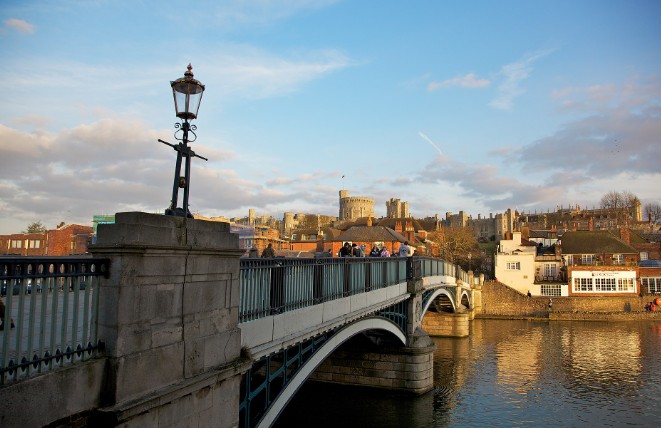
5. Windsor, Berkshire (South East)
Windsor is ranked as one of the best places to grow old because it boasts the second-highest life expectancy in England alongside the fastest NHS referral pathways for rapid trauma and orthopedic care.
The lifestyle is highly refined, characterized by royal parkland walks, fine dining, and theater.
This affluent environment explains why Office for National Statistics (ONS) data confirms the borough boasts the second-highest life expectancy in England alongside the fastest NHS referral pathways for rapid trauma and orthopedic care.
- Property & Rent Cost: Average house price is £482,000; average monthly rent is £1,450–£1,800.
- Benefits & Pension Perks: Exceptional public transport connectivity to London via direct rail links means retirees can maintain premium consulting work or cultural ties. The affluent area ensures that local public services remain impeccably maintained.
- NHS Access: Medical infrastructure is world-class, offering rapid 18-week diagnostic pathways and minimal A&E waiting turnaround times. This provides unmatched peace of mind for those managing long-term health vulnerabilities.
6. Hartlepool, County Durham (North East Hub)
Hartlepool has emerged as a major modern retirement hotspot because it ranks first nationally for NHS emergency room turnaround times while maintaining some of the most affordable coastal housing stock in Great Britain.
A redeveloped modern marina offers flat walking paths, accessible restaurants, and a bustling array of senior-focused social circles.
The hidden regret relates to long-term estate planning; patchy regional economic growth means property capital growth is slow, potentially limiting the inheritance value passed to children.
- Property & Rent Cost: Average house price is £155,000; average monthly rent is £550–£650.
- Benefits & Pension Perks: Unbelievably low property values allow retirees to entirely wipe out remaining mortgage debts. The low cost of living extends to local amenities, significantly stretching the purchasing power of the state pension.
- NHS Access: Regional healthcare performance is exceptional, holding top spots for short elective joint surgery wait times. The local medical framework is robustly funded to handle older demographics.
7. Argyll and Bute (Western Scotland)
Argyll and Bute is officially the highest-ranked retirement destination in Scotland, scoring a massive 98/100 on the National Records of Scotland (NRS) satisfaction indexes due to its low crime rates, pristine marine air, and expansive natural spaces.
This is a paradise for active retirees who enjoy sea lochs, sailing, walking, and locally caught seafood.
The primary hidden regret stems from transport vulnerability; an over-reliance on winter ferry timetables and road closures can make accessing timely personal care stressful during severe weather.
- Property & Rent Cost: Average house price is £195,000; average monthly rent is £650–£800.
- Benefits & Pension Perks: Scottish governance provides free senior bus travel and entirely free personal care pathways from age 60. These structural safety nets drastically reduce the long-term healthcare liabilities faced by private estate capital.
- NHS Access: Excellent localized primary care operates out of major towns like Helensburgh. However, specialist surgical treatments require an organized commute into Glasgow clinical centers.
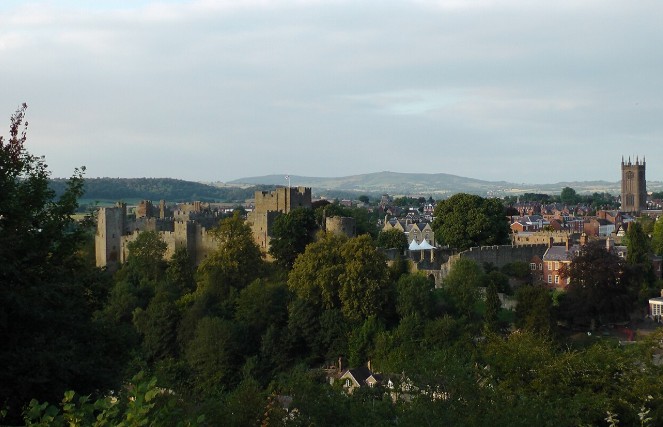
8. Ludlow, Shropshire (West Midlands)
Ludlow is the definitive retirement choice for food lovers and history enthusiasts, combining a slow-paced country lifestyle with a high concentration of award-winning independent high-street trades.
The town features a medieval Norman castle, vibrant weekly markets, and exceptional local produce. The hidden trap here is the historic, steep topography; the town’s beautiful cobblestone hills can quickly become a major mobility barrier if knee or joint issues develop.
- Property & Rent Cost: Average house price is £270,000; average monthly rent is £800–£950.
- Benefits & Pension Perks: The surrounding Shropshire Hills offer free, world-class outdoor recreation on the doorstep. Mid-range house prices make it highly accessible for middle-tier pension savers looking to change pace.
- NHS Access: Primary care access remains steady, with dedicated integrated community teams explicitly set up to support independent living for aging residents.
9. Solihull, West Midlands (Urban Suburban)
Solihull consistently dominates national happiness indexes because it bridges urban luxury with leafier, green suburban calm, creating the ideal ecosystem for retirees who dislike rural isolation.
Retirees enjoy premium shopping, manicured urban parks, and dozens of active sports, tennis, and bridge clubs.
The hidden financial downside is the steep council tax structure levied across the metropolitan borough, which presents a fixed cost that chips away at investment returns.
- Property & Rent Cost: Average house price is £315,000; average monthly rent is £1,000–£1,250.
- Benefits & Pension Perks: High density of local businesses creates competitive pricing on everyday goods. Excellent proximity to the national rail and airport hub simplifies traveling to visit family abroad.
- NHS Access: The area is served by a highly robust, multi-site NHS trust infrastructure that excels in chronic preventative care programs and senior diagnostic testing.
10. Helmsley, North Yorkshire (Yorkshire & Humber)
Helmsley is North Yorkshire’s most coveted market town for later life, offering a tight-knit, fiercely protective community network and an environment with virtually zero recorded anti-social behavior.
Daily life involves picturesque walled gardens, localized boutiques, and refined tea rooms. The hidden structural regret is an incredibly tight local housing stock; finding rare single-level bungalows or modern apartments with lateral layouts is an expensive, multi-year uphill battle.
- Property & Rent Cost: Average house price is £310,000; average monthly rent is £850–£1,050.
- Benefits & Pension Perks: Strong asset preservation is guaranteed by historical property demand in the area. The local community organizes shared transport schemes, reducing the financial burden of solo car ownership.
- NHS Access: The local surgery provision is highly rated for patient-to-doctor ratios. However, accessing major acute hospitals requires a 40-minute drive out to York or Middlesbrough.
11. Totnes, Devon (Alternative Coastal Belt)
Totnes is a world-famous Transition Town on the River Dart, making it the premier choice for progressive, eco-conscious retirees who prioritize community-led sustainability and local arts over traditional seaside resorts.
The lifestyle centers around organic markets, independent artisan workshops, and river activities.
The hidden physical regret is the notorious incline of the historic high street; walking to the local chemist or post office can become exhausting for retirees managing long-term respiratory or joint challenges.
- Property & Rent Cost: Average house price is £350,000; average monthly rent is £1,050–£1,300.
- Benefits & Pension Perks: A massive volunteering culture gives retirees a strong sense of purpose, combating post-work identity loss. Local community currencies and food cooperatives help shield shoppers from mainstream supermarket inflation.
- NHS Access: Holistic health options sit alongside standard NHS primary services, with solid patient support structures managed through larger clinical trusts in nearby Torbay.
12. Great Yarmouth, Norfolk (East Anglian Coast)
Great Yarmouth is the ultimate budget-friendly coastal alternative for retirees who want sweeping sandy beaches and flat walking infrastructure without paying the highly inflated premium prices of North Norfolk.
Daily life offers easy access to the peaceful Norfolk Broads for birdwatching, boating, and coastal walks. The hidden lifestyle regret stems from pockets of localized urban deprivation, which can impact neighborhood aesthetics and suppress property resale values outside of prime residential zones.
- Property & Rent Cost: Average house price is £175,000; average monthly rent is £600–£750.
- Benefits & Pension Perks: Strikingly low entry prices mean a substantial cash buffer can be preserved in high-interest ISAs to generate supplementary monthly income. The entirely flat coastal plain makes daily errands physically effortless.
- NHS Access: The town is directly supported by the James Paget University Hospital, a facility highly regarded for its specialized, modern stroke treatment and senior rehabilitation wings.
13. Vale of Glamorgan (South Wales Coast)
The Vale of Glamorgan places first in Welsh lifestyle indexes because it pairs dramatic Heritage Coast clifftop vistas with fast, direct public transport links into the capital city of Cardiff.
Glamorgan offers high-end market towns like Cowbridge, local vineyards, and low historic crime rates.
The hidden hazard involves coastal erosion; buyers must pay for specialized structural and environmental surveys, as certain clifftop properties face long-term insurance refusals.
- Property & Rent Cost: Average house price is £260,000; average monthly rent is £800–£1,000.
- Benefits & Pension Perks: Retirees profit from Wales’ age-60 free travel card while maintaining immediate access to major city cultural events, matching the financial profile of an urban retirement at a rural cost.
- NHS Access: Clinical pathways are governed by the well-funded Cardiff and Vale University Health Board, ensuring rapid access to specialist medical consultants and localized diagnostic screenings.
14. Clitheroe, Lancashire (North West Valley)
Clitheroe is the safest and most socially cohesive retirement option in Lancashire, consistently securing maximum points for low anti-social behavior within the idyllic, green landscape of the Ribble Valley.
A historic castle dominates the town center, which is filled with independent retailers and boasts excellent walking access to the Forest of Bowland.
The hidden physical regret is the region’s high average rainfall; the damp northern winters can significantly exacerbate arthritic joint pain and increase home insulation costs.
- Property & Rent Cost: Average house price is £265,000; average monthly rent is £750–£900.
- Benefits & Pension Perks: Affordable running costs across local properties allow retirees to maintain independent lifestyles without depleting their investment portfolios early.
- NHS Access: The area features well-integrated primary health centers and local pharmacy networks that successfully maintain lower patient-to-doctor ratios than neighboring urban centers.
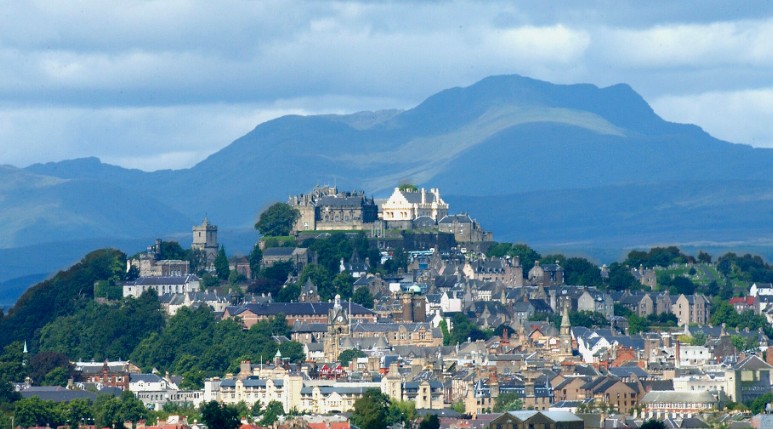
15. Stirling and Strathallan (Central Scotland)
Stirling is highly favored for a Scottish retirement because it acts as the geographic gate to the Highlands, providing flat city-center pathways and city amenities without urban crowding.
The local environment is rich with Scottish heritage sites, walking clubs, and university-linked continuing education courses.
The hidden downside is the high local concentration of university students, which can cause seasonal noise and crowded public transport routes during term time.
- Property & Rent Cost: Average house price is £215,000; average monthly rent is £700–£900.
- Benefits & Pension Perks: The central rail hub allows for effortless day trips to Edinburgh or Glasgow without the cost of car ownership. Free personal care models under Scottish law insulate retirement pots from sudden nursing fees.
- NHS Access: The region benefits from modernized clinical facilities under NHS Forth Valley, which scores highly for its integrated health and social care community partnerships.
What Makes a Location One of the Best Places to Retire?
The ideal retirement destination must support both lifestyle aspirations and long-term asset preservation.
Choosing where to relocate involves analysing how inflation affects your purchasing power, evaluating local public transport connectivity, and ensuring proximity to reliable primary healthcare.
The Shift Toward Infrastructure Resilience
In practice, choosing a retirement location based solely on holiday memories often leads to isolation. A successful relocation requires evaluating a region’s winter infrastructure, independent living support, and the density of the local over-60 population.
With the rising cost of living in 2026, finding a location that minimises council tax exposure and high commuting costs is central to safeguarding your private pension savings.
How Does the 4% Rule in Retirement in the UK Apply Today?
The 4% rule in the UK operates by taking your total retirement asset pot (pensions, ISAs, cash) and withdrawing 4% in year one. In subsequent years, you adjust that exact cash figure upward to match the UK Consumer Prices Index (CPI) inflation rate to preserve lifetime purchasing power.
To apply this retirement framework step-by-step under current UK rules, follow this sequence:
- Calculate total assets: Aggregate all private pensions, ISAs, and liquid cash reserves.
- Determine year-one withdrawal: Multiply the total capital by 0.04 to establish the initial budget.
- Adjust for inflation annually: Increase the cash withdrawal amount each year matching the Consumer Prices Index (CPI).
- Account for platform fees: Deduct annual fund management charges directly from the remaining balance.
- Factor in the State Pension: Reduce the private draw amount once the State Pension triple lock kicks in.
- Maintain a cash buffer: Keep 12 to 24 months of expenses in cash to avoid selling assets during market dips.
- Review portfolio balance: Reallocate investments between equities and bonds every 12 months to manage risk.
The Psychology of Later Life
The emotional transition of retirement requires just as much strategic planning as the financial deployment of your pension capital. Retirees must choose environment archetypes that minimize post-work identity loss and protect against seasonal isolation.
| Retirement Destination Type | Average Property Entry | Key Infrastructure Advantage | Core Lifestyle Vulnerability |
| Northern Urban Cities | Low (£130k – £180k) | High NHS hospital density & public transport | Higher urban noise and localized congestion |
| Historic Market Towns | Mid-High (£320k – £450k) | Low crime, high walkability & community groups | Limited housing stock suitable for single-level living |
| Coastal & Rural Belts | Mid (£240k – £310k) | High air quality & scenic open spaces | Severe winter seasonal closures & GP shortages |
Strategic Steps for Your Upcoming Relocation
A secure UK retirement relocation requires booking a two-week winter rental to assess off-season infrastructure, checking that target GP surgery lists are actively accepting new patient registrations, and projecting post-stamp-duty liquid cash reserves.
To ensure your retirement move is both financially secure and personally fulfilling, take a structured approach to your planning:
- Test the Winter Climate: Start by booking an extended, two-week rental stay in your target area during the depth of winter to experience the location when tourist amenities are closed.
- Audit Local Medical Surgeries: Visit the local medical center to verify if their GP patient list is open.
- Map Everyday Walkability: Physically test the walkability from the property to the nearest post office and chemist to ensure mobility down the line.
- Run Moving Capital Projections: Request a formal breakdown of your pension capital projections to ensure your remaining liquid funds can easily support your lifestyle once your moving costs, estate agent fees, and stamp duty are fully settled.
FAQ
What is the cheapest town or city to retire to in the UK?
Hull and parts of Lancashire consistently rank as the most affordable options, offering average property prices well below £150,000 alongside comprehensive public amenities.
Where do most retirees move to in the UK?
The highest concentrations of relocating retirees are found along the coastal stretches of Devon, North Norfolk, Dorset, and the rural fringes of North Yorkshire.
Does moving within the UK alter your State Pension payouts?
No. Your UK State Pension remains completely unaffected by regional moves within England, Scotland, Wales, or Northern Ireland, maintaining its national structure.
Is it better to downsize or rent during retirement?
No, renting is rarely the safer long-term financial option. Downsizing releases illiquid property equity to actively support your retirement lifestyle, whereas renting can expose your fixed income to unpredictable private sector rent increases.
How do council tax bands change in rural retirement areas?
Rural and coastal councils often charge higher premiums for lower services due to older local demographics, meaning your council tax bill could rise.
What is the most popular retirement age in the UK?
The most common retirement window is between 63 and 66, closely aligning with the current qualifying threshold for the UK State Pension.
Can I access free public transport when I relocate?
Age thresholds vary by region; Scotland and Wales offer free senior bus passes at age 60, whereas England ties the benefit to your state pension age.
