
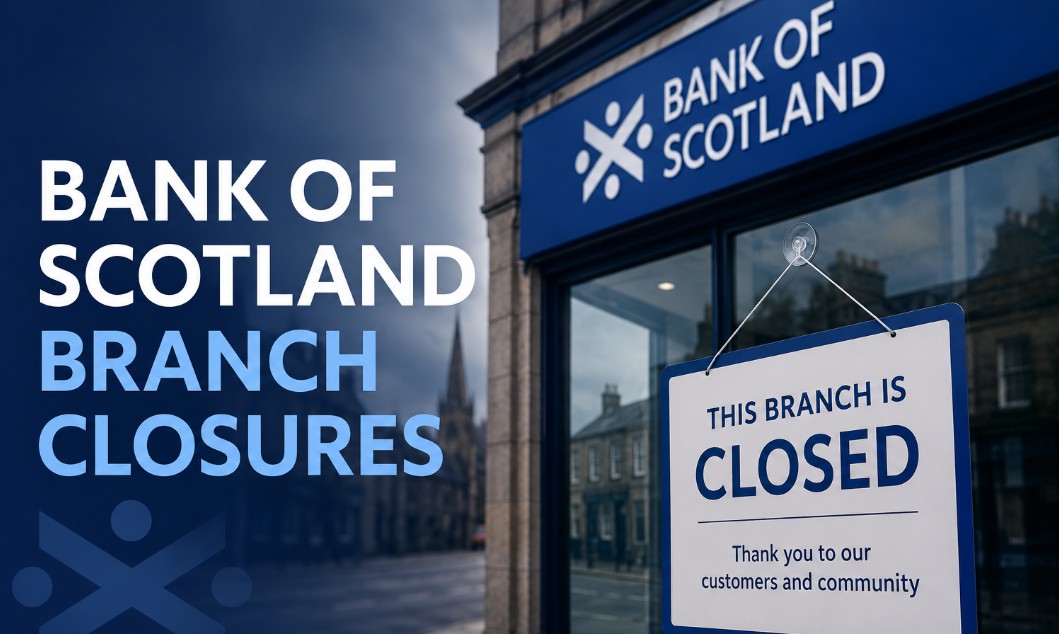
Bank of Scotland branch closures are accelerating as Lloyds Banking Group shifts toward digital services and shared community spaces. While high-street hubs disappear, customers can still manage cash via local Post Offices, mobile banking vans, and new Banking Hubs. Checking your local branch status online helps you stay ahead of these local changes.
Why Are the Bank of Scotland Branch Closures Happening?
Bank of Scotland branch closures are happening primarily due to an exponential decline in physical high-street counter transactions and a massive transition toward mobile banking application usage.
Lloyds Banking Group is restructuring its brick-and-mortar footprint to optimise commercial operational efficiency while reinvesting into cybersecurity and alternative digital servicing platforms.
The Shift in Physical Banking
The retail banking landscape is shifting fast. As of 2026, major banks are consolidating their physical footprints to match changing consumer habits. While face-to-face support still matters, the everyday need for a high-street branch has dropped as digital tools take over.
Footfall is down. Because of this, Bank of Scotland branch closures target low-traffic locations to prioritise alternative services.
Rather than running storefronts in every town, the new model relies on regional coverage, mobile units, and shared spaces. This keeps essential cash services accessible right where communities need them most.
Balancing Infrastructure Costs with Digital Security
Financial institutions face the ongoing operational challenge of maintaining costly, underutilised physical infrastructure while simultaneously investing in robust cybersecurity frameworks.
By reallocating resources from traditional storefront leases toward robust consumer applications, the banking group aims to fulfil modern data standards without disconnecting rural areas, working directly alongside the national Access to Cash initiative.
The table below breaks down how modern consumer options compare to legacy branch footprints:
| Service Option | Best Used For | Availability |
| Traditional Branch | Complex advice, in-person support | Limited/Consolidated |
| Banking Hubs | Basic transactions, cash deposits | Growing network |
| Post Office | Everyday banking, cash withdrawal | Extensive |
| Mobile Banking App | Routine management, transfers | 24/7 Access |

What Are the Bank of Scotland Branch Closures?
The 2026 Bank of Scotland branch closures consist of a multi-phase consolidation program running from January through October.
A total of 24 physical branches across Scotland and the wider UK are closing, overseen by the Financial Conduct Authority (FCA) to ensure local communities retain mandatory minimum cash services.
List of Bank of Scotland Branches Closing (Full 2026 Schedule)
The following matrix provides the verified timeline of all scheduled and executed Bank of Scotland branch closures for 2026:
| Branch Location | Regional County Area | Exact Closure Date |
| Larkhall | South Lanarkshire | January 8, 2026 |
| Bellshill | North Lanarkshire | January 12, 2026 |
| Glasgow Anniesland | Glasgow City | January 12, 2026 |
| Tain | Highlands | January 12, 2026 |
| Erskine | Renfrewshire | January 13, 2026 |
| Nairn | Highlands | January 20, 2026 |
| St Andrews | Fife | January 20, 2026 |
| Castle Douglas | Dumfries and Galloway | January 22, 2026 |
| Gairloch | Wester Ross | January 29, 2026 |
| Dingwall High Street | Easter Ross | March 25, 2026 |
| Largs | North Ayrshire | March 25, 2026 |
| Garrowhill | Glasgow | June 4, 2026 |
| Penicuik | Midlothian | June 4, 2026 |
| Bridge Of Don | Aberdeen | June 10, 2026 |
| Haddington | East Lothian | June 11, 2026 |
| Rutherglen | South Lanarkshire | June 11, 2026 |
| Broughty Ferry | Dundee | June 15, 2026 |
| Blairgowrie | Perth and Kinross | June 18, 2026 |
| Kelso | Scottish Borders | June 18, 2026 |
| Stonehaven | Aberdeenshire | June 18, 2026 |
| Lochgilphead | Argyll and Bute | June 22, 2026 |
| Benbecula | Outer Hebrides | July 1, 2026 |
| Hawick | Scottish Borders | October 7, 2026 |
| Grangemouth | Falkirk | October 8, 2026 |
Key Information for Affected Customers
For each of these locations, the Financial Conduct Authority (FCA) requires that LINK assess the local community’s Access to Cash needs. These reviews are published to determine if additional services, such as new ATMs or Banking Hubs, are required to support the local area.
- Banking Hubs: In areas like Grangemouth and Hawick, plans for new Banking Hubs have already been initiated to replace lost face-to-face services.
- Community Bankers: In locations like Haddington and Kelso, the bank has confirmed that Community Bankers will visit the area to provide support with account enquiries and digital banking, even after the physical branch closes.
How to Check for Bank of Scotland Branch Closures Near Me?
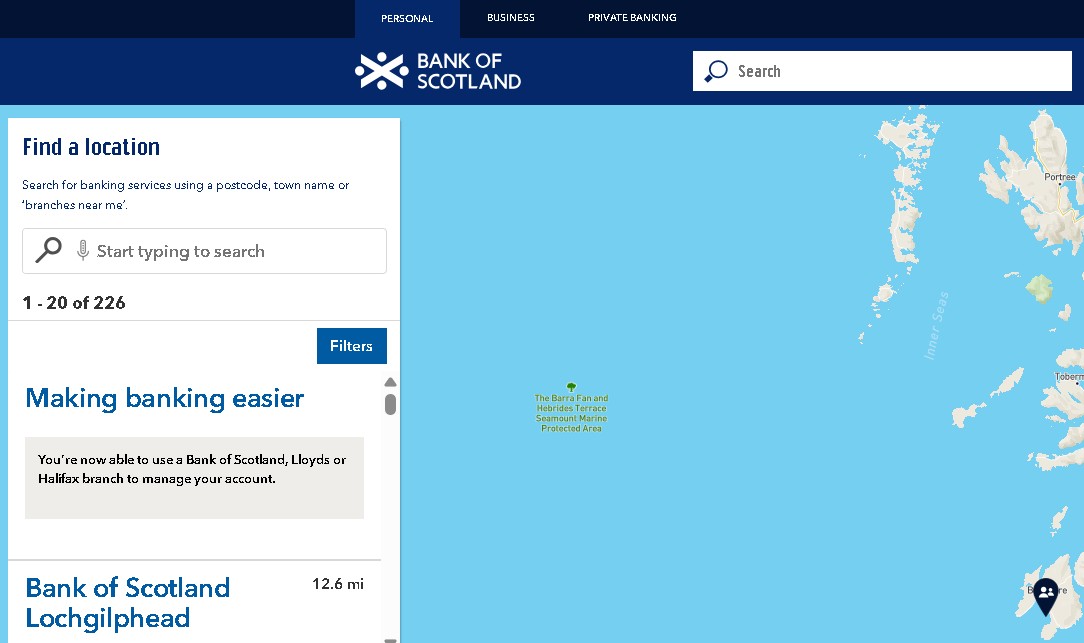
To check for Bank of Scotland branch closures near you, visit the official Bank of Scotland branch locator portal, enter your postcode or town name, and review the live operational status. The system displays current operating hours, scheduled termination dates, and alternative mobile van routing times for your immediate area.
Staying informed is essential for those who rely on in-person services. The bank provides a dedicated branch locator tool on its official website, which offers the most accurate, real-time data regarding local site operations.
- Navigate to the official Bank of Scotland branch finder page.
- Enter your current postcode or town name into the search bar.
- Review the list of nearby locations and their respective operational statuses.
- Check for Community Banker or mobile van visit schedules if no branch is listed.
- Verify if your nearest location is slated for a future closure date.
- Assess the proximity of the nearest shared Banking Hub.
- Save the direct contact number for your local branch or regional service team.
- Sign up for email alerts if the bank offers notification services for regional changes.
What Happens to My Account If My Branch Closes?
When a Bank of Scotland branch closes, your sort code, account number, standing orders, and direct debits remain unchanged.
Your personal or business banking profile automatically migrates to a designated alternative anchor branch, and all existing debit cards, mobile applications, and checkbooks continue working normally.
Automated Account Migrations
When a branch closes, your personal account details remain completely intact. You do not need to take any manual action regarding your checking accounts, savings profiles, or loan products.
The bank sends official mail correspondence detailing the nearest physical alternative location and confirming the automated transfer of your home branch records.
The Lloyds Banking Group Co-Servicing Model
In practice, many customers find that the Lloyds Banking Group co-servicing framework provides a straightforward alternative.
Because Bank of Scotland operates as an aligned brand alongside Lloyds Bank and Halifax, personal customers can use their debit cards at Lloyds Bank counters across the UK for standard counter transactions, significantly expanding their physical servicing access.
How Does It Impact the Customers?
Bank of Scotland branch closures impact customers by lengthening physical travel distances for face-to-face banking, which particularly affects vulnerable individuals and cash-reliant small businesses.
This impact is mitigated through Post Office counter banking partnerships and scheduled local visits from Community Bankers.
Challenges for Vulnerable and Cash-Reliant Users
Branch closures inevitably disrupt established daily routines, especially for elderly individuals, rural communities, and small business owners who depend heavily on physical cash deposits.
Adapting to purely digital spaces requires a shift in how individuals interact with their funds. However, leveraging the extensive UK Post Office network or aligning schedules with visiting mobile banking units helps maintain continuity for essential face-to-face transactions.
Keep in mind that day-to-day cash rules are shifting across the country, so keeping tabs on the latest UK bank ATM withdrawal limit update is a smart way to ensure you can still access the physical funds you need without a local counter.
Alternatives for Closing Branches
The primary alternatives to closing a Bank of Scotland branch are shared high-street Banking Hubs, the UK Post Office counter network, mobile banking vans, and digital applications.
These services allow personal and commercial accounts to withdraw cash, deposit coins, and handle everyday financial management without a dedicated single-brand building.
The Rise of Shared Banking Hubs
The introduction of the shared Banking Hub is a direct industry response to the consolidation of traditional high-street banks. Managed collectively by the Post Office and Cash Access UK, these spaces feature rotating staff from different major banks on fixed weekdays.
They provide full personal banking services and cash infrastructure to towns that have seen multiple individual branch closures.
The National Post Office Banking Partnership
Furthermore, the long-term partnership between the retail banking sector and the Post Office allows personal and business customers to deposit cash, withdraw funds, and check balances at over 11,000 locations nationwide.
This collaboration acts as a critical safety net for small business owners who must manage daily cash takings without a local bank branch.

Guidance for Small Businesses and Vulnerable Customers
Small businesses and vulnerable customers facing branch closures should utilize local Post Offices for daily coin deposits, activate telephone banking channels, and arrange sessions with traveling Community Bankers.
These options help businesses secure cash processing and assist customers who prefer not to use online platforms.
Cash Management Hurdles for Small Businesses
Commercial operators often find the loss of a local cash deposit counter the most challenging aspect of branch consolidation.
To handle daily takings safely, many enterprises utilize secure commercial night safes, coordinate specialized secure cash courier operations, or leverage business banking facilities at their local Post Office counter.
Protecting Elderly and Vulnerable Account Holders
For elderly or vulnerable individuals, the bank deploys specialized Community Bankers who travel into affected areas on fixed schedules. These representatives assist with setting up digital accounts, managing telephone tools, and identifying financial fraud risks.
Customers can call the bank’s dedicated accessibility support helplines to find out when a Community Banker is next scheduled to visit their area.
Summary of Next Steps
For those affected by closures, the immediate priority is to identify the nearest Banking Hub or Post Office to ensure continued cash access. Review your account settings to ensure mobile or telephone banking is activated as a primary management tool.
If you require specialised in-person support, schedule an appointment with a Community Banker or utilise the locator tool to find the next nearest full-service branch.
FAQ about Bank of Scotland branch closures
Can I use my Bank of Scotland card at a Lloyds branch?
Yes. Due to their shared ownership under Lloyds Banking Group, you can use your Bank of Scotland debit card at many Lloyds Bank branches for basic banking services such as withdrawals and cash deposits.
What happens if I live in a rural area?
The bank typically deploys mobile banking vans that visit rural communities on a set schedule. Additionally, you should check for the nearest Banking Hub, which offers face-to-face service for multiple banks.
Is there a Banking Hub near me?
You can search the national Cash Access UK website to locate your nearest shared Banking Hub. These hubs are being rolled out nationwide to replace lost branch access.
What should I do if I cannot use online banking?
No need to worry if digital tools aren’t an option for you. You can contact the bank directly to explore alternative support, including telephone banking, mobile branch van schedules, or tracking down a local Community Banker.
Are all banks closing their branches?
No, not every institution is shrinking its footprint at the same pace. While consolidation is widespread, some banks have paused closure plans to align with updated regulatory reviews regarding guaranteed local cash access.
Who owns Bank of Scotland now?
Bank of Scotland is a subsidiary of Lloyds Banking Group, one of the UK’s largest financial institutions. This ownership structure dictates the service points available to you across the group’s brands.
Can I deposit coins at the Post Office?
Yes, most Post Office branches accept cash and coin deposits for Bank of Scotland accounts, providing a vital service for small businesses and individuals who handle physical currency regularly.
