
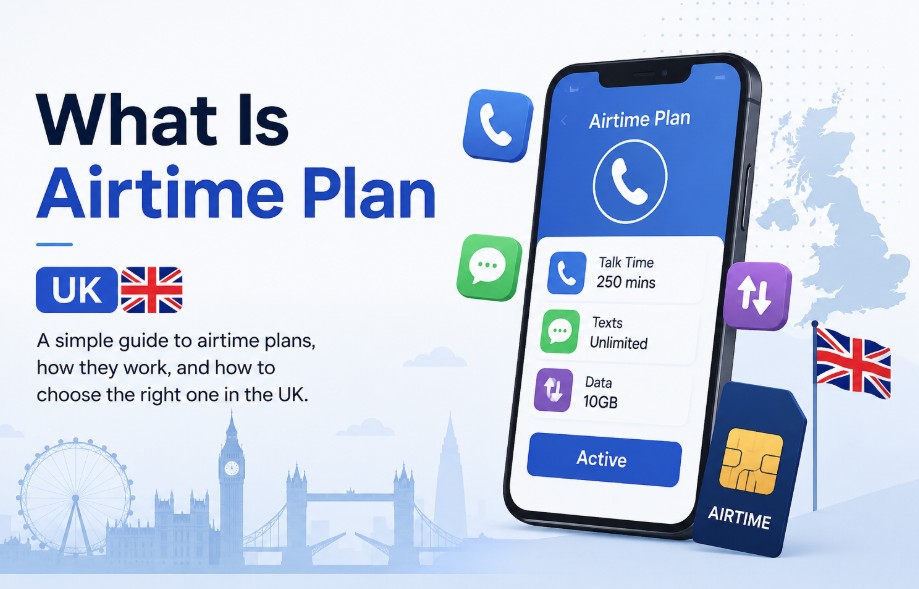
An airtime plan is a monthly subscription contract with a mobile network provider that pays for cellular services, including a specific allowance of mobile data, voice calling minutes, and text messages. Unlike hardware financing, it covers only the digital connectivity required to use a phone on a UK network.
Key Facts
- UK mobile airtime plans function independently from physical device hardware contracts
- Structural comparison of billing terms across major networks
- Monthly pricing tiers for primary UK providers including EE, Vodafone, O2, and Three
- Ofcom regulatory frameworks governing mid-contract price rises
- Actionable methods for lowering direct debits via SIM-only switching and consumer loyalty cashback schemes
What is Airtime Plan?
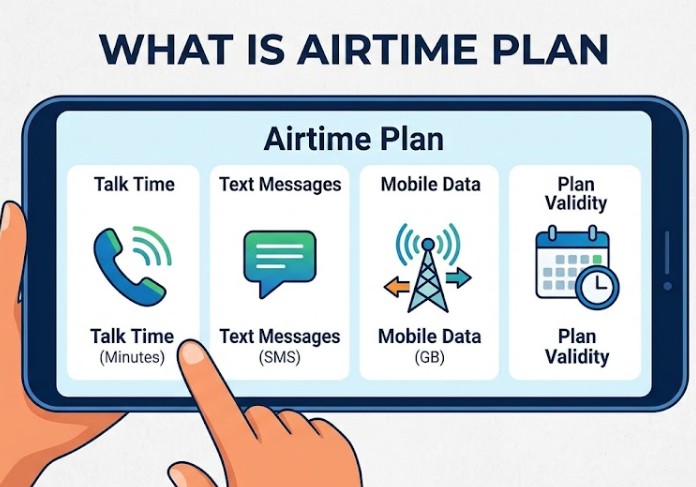
An airtime plan is a monthly service subscription with a mobile network provider that grants access to cellular services. It covers the digital connectivity required to use a phone on a network, packaging together specific allowances of mobile data, voice calling minutes, and text messages.
Essentially, an airtime plan functions as the operational fuel for a mobile phone. Without it, a smartphone cannot connect to cellular masts for internet browsing, outbound calls, or SMS transmissions when away from local Wi-Fi networks.
In the modern UK telecommunications market, these plans are decoupled from physical hardware, meaning they have their own specific direct debit line items, explicit legal terms, and unique regulatory conditions monitored by Ofcom.
How Does an Airtime Plan Work?
When you sign up for a mobile contract in the UK today, networks separate the service from the physical handset.
- The SIM Card: The network provider issues you a physical SIM card or an electronic eSIM. This card contains the secure credentials required to authenticate your phone with local cellular towers.
- Monthly Refresh: At the start of every billing cycle, your network refreshes your allocated data, call, and text allowances.
- Network Access: As long as your plan is active, you can access the provider’s 4G and 5G infrastructure.
- Out-of-Tariff Usage: If you exhaust your monthly allowances before the cycle resets, your data access may pause, or you will be charged premium out-of-tariff rates for additional usage.
What Are the Key Features in an Airtime Plan?
A standard modern airtime contract packages several distinct core elements together:
- Mobile Data: Measured in gigabytes (GB), this allows for internet browsing, video streaming, and app usage over 4G or 5G networks.
- Voice Minutes: The allowance for making traditional telephone calls to standard UK landlines and mobile numbers. (Most modern plans offer unlimited minutes).
- Text Messages (SMS): The allowance for sending traditional text messages, which excludes data-based messaging apps like WhatsApp or iMessage.
- Network Perks: Depending on the provider, plans may bundle distinct incentives, such as automated network optimization, device repair discounts, roaming access passes, or premium entertainment options where users can cancel Disney Plus subscription plans or manage other third-party streaming bundles directly through their mobile bill.
How Does Airtime Plan Cost Work?
The cost structure of an airtime plan is dynamic and dictated by a few market factors:
- Data Tiering (The Baseline Cost): Your initial monthly price is primarily driven by how much data you choose. Higher allowances cost more, but the cost per gigabyte drops significantly as you scale up. Across the major UK networks (EE, Vodafone, O2, and Three), baseline SIM-only airtime costs generally fall into three tiers:
- Low-Tier (1GB to 10GB): Typically ranges from £7 to £12 per month. Best for light users who rely heavily on home or office Wi-Fi.
- Mid-Tier (25GB to 150GB): Typically ranges from £12 to £22 per month. This is the market sweet spot for most consumers, offering ample data for daily browsing and video streaming.
- Premium/Unlimited Tier: Typically ranges from £23 to £40+ per month. These plans remove data limits entirely and often package maximum uncapped 5G speeds alongside premium network extras.
- Contract Length Discounts: Commitment length heavily influences the monthly cost. Networks reward longer commitments with lower monthly rates. For example, an identical 30GB data allowance might cost £20 a month on a flexible 30-day rolling term, but drop to £13 a month if you commit to a 12-month or 24-month contract.
- Mid-Contract Price Rises: Mobile networks typically adjust active airtime plan pricing annually. Under Ofcom guidelines, these increases must be clearly outlined in your initial contract terms. Instead of vague percentages, major networks now widely implement fixed flat-rate annual increases (e.g., your monthly bill increasing by a mandatory £1.50 to £2.50 each year on a specific date) to maintain infrastructure.
- Flexibility: Most major UK networks allow customers to upgrade their airtime data tier at any point mid-contract if they find they need more data. However, downgrading to a lower, cheaper data tier is typically limited to once per billing cycle and cannot fall below the minimum baseline threshold agreed upon during your initial sign-up.
What is the Difference Between an Airtime Plan and a Device Plan?
Understanding the structural split in modern UK phone contracts is essential for managing your personal or business finances. A standard pay-monthly mobile package is frequently split into two entirely separate legal contracts.
The following table breaks down how these two contract elements split operational rules, pricing structures, and financial obligations:
| Billing Characteristic | Airtime Plan | Device Plan |
| What You Pay For | Network connectivity (Data, Calls, SMS) | The physical mobile phone handset |
| Legal Structure | Standard rolling service subscription | Regulated consumer credit agreement (Loan) |
| Price Stability | Subject to annual inflation-linked increases | Fixed cost that never changes during the term |
| Tax Implications | Standard VAT applied to business use | Fixed asset hardware depreciation |
| Contract Flexibility | Can often be upgraded or downgraded mid-term | Fixed monthly cost until the loan hits zero balance |
Can I cancel my airtime plan but keep my device plan?
Under current consumer protection rules, cancelling a standalone airtime contract while attempting to maintain independent monthly payments on a device loan is highly restricted.
Because the interest-free hardware loan is heavily subsidized by the network provider, terminating the airtime plan early often triggers a clause in the contract.
Is an airtime plan the same as a SIM-only deal?
Yes, from a structural perspective, a SIM-only deal is a standalone airtime plan. When consumers purchase a SIM-only contract, they pay exclusively for network access without any underlying hardware costs or credit agreements.
SIM-only options represent the most efficient way to access the cheapest airtime plan rates because providers do not need to factor handset subsidies into the monthly pricing.
These plans are available on flexible 30-day rolling terms or fixed 12-month and 24-month commitments, providing an option for users who already own an unlocked phone.
What does an airtime plan mean on Vodafone, O2, and EE?
The split-contract mechanism is implemented across all major UK mobile networks, though each provider uses its own commercial branding and terms.
What is an O2 airtime plan?
O2 pioneered the split-billing concept in the UK through its O2 Refresh scheme. When signing up for an O2 contract, customers receive two separate bills: one for the device loan and one for the O2 airtime plan.
This particular network offers flexibility by allowing customers to alter their core data allowances up or down once every billing cycle via their digital account app, provided they maintain the base minimum requirements of their promotional terms.
What is a Vodafone airtime plan?
On Vodafone, split billing is managed via the Vodafone EVO platform. A Vodafone airtime plan bundles standard data, minutes, and texts with distinct network perks, such as roaming access passes or entertainment subscriptions.
When reviewing decisions on Vodafone EVO contracts, consumers should note that while the device portion remains entirely fixed, the airtime portion is bound by specific mid-contract price adjustment clauses tied to inflation metrics.
What does airtime plan mean on EE?
EE runs its split billing under the EE Flex Pay program. The EE airtime plan provides access to the network’s 4G and 5G infrastructure.
Subscribers on these packages receive specific service guarantees, such as automated network optimization and device repair discounts, keeping the financing of the hardware transparently insulated from the monthly service charges.
Why do I pay a separate airtime charge on my Apple Watch?
Smartwatches equipped with cellular functionality require independent network provisioning to make calls and stream data without a nearby smartphone.
For an iPhone and an Apple Watch to share a single phone number away from home, networks charge a secondary, supplementary airtime fee.
This fee covers the digital eSIM profile cloning and data routing required to maintain dual-device synchronization on cellular networks.
What happens when an airtime plan runs out or ends?
Managing the conclusion of a contract or navigating data limits requires a clear understanding of network defaults.
What happens to your service?
When an individual runs out of airtime, it means they have fully exhausted their monthly allowance of data, minutes, or texts before the billing cycle refreshes.
On a traditional contract, the network will pause data roaming services and present an option to purchase an immediate digital data add-on.
On older or pay-as-you-go systems, running out of airtime means outbound calls and data access cease completely until credit is topped up.
Do I have to pay for airtime after my phone is paid off?
Once a device plan loan reaches a zero balance, ownership of the handset transfers fully to the consumer, and the device direct debit automatically stops. However, the airtime plan does not automatically cancel.
The network will continue providing data, voice, and text services on a rolling monthly basis at the existing rate.
To avoid overpaying, consumers should actively contact their provider at this stage to transition their active airtime plan onto a cheaper SIM-only deal.
How do I stop or manage an active airtime subscription?
Managing or terminating an active airtime service involves a structured process to avoid early termination fees or negative credit reporting.
- Check contract status: Log into the network provider’s online portal or app to check whether the minimum commitment term of the airtime contract has expired.
- Review the device balance: Verify if there is any remaining balance on the parallel device loan, as canceling airtime early may force an immediate settlement of the handset debt.
- Request a PAC or STAC code: Text PAC to 65075 to keep the existing mobile number, or text STAC to 75075 to cancel the line entirely and receive a switching profile under Ofcom regulations.
- Submit formal notice: Provide the required 30-day notice period to the mobile operator if canceling manually without switching to a different provider.
- Settle the final bill: Pay the final pro-rata invoice, which includes any extra out-of-tariff usage incurred up to the termination date.
- Confirm direct debit removal: Verify via online banking that the specific network provider direct debit has been formally closed after the final invoice clears.
What are Airtime Rewards?
Airtime Rewards is a third-party consumer loyalty platform operating across major UK networks, including EE, O2, Vodafone, and Three. Users link their everyday debit and credit cards to the secure app.
When purchases are made at partner high-street retailers, supermarkets, or restaurants, a percentage of the transaction value is credited back as cashback. This accumulated balance can be redeemed directly against an active mobile airtime bill, lowering the monthly direct debit cost.

Final Summary
An airtime plan dictates how much data, calling capacity, and text access a user receives each month on UK mobile networks.
Because modern contracts split the service cost from the physical phone loan, monitoring when a handset is paid off provides a clear opportunity to switch to a cheaper SIM-only deal and avoid unnecessary ongoing expenses.
FAQ
Can I cancel my Vodafone airtime plan?
Yes, but if the minimum contract term has not expired, an early termination fee will apply. Additionally, any outstanding balance on an associated Vodafone EVO device plan will become due immediately.
Can I cancel my airtime plan on O2 or EE without penalties?
No. Cancellation without penalty is only permitted if the minimum term has concluded, or during the initial 14-day statutory cooling-off period. Outside these windows, standard early termination fees apply across both networks.
What is Airtime Plan 3?
Airtime Plan 3 refers to an internal billing tier or promotional package used by networks to classify specific data allowances, speeds, or legacy multi-line discounts within a customer’s account management profile.
How do mid-contract price rises affect my airtime charges?
Mobile networks typically adjust airtime plan pricing annually. Under Ofcom guidelines, these increases must be clearly outlined in the initial contract terms, often tied to inflation metrics like the Consumer Price Index (CPI).
Can I change my airtime plan mid-contract?
Yes. Most major UK networks allow customers to upgrade their airtime data tier at any point. Downgrading to a lower, cheaper data tier is typically limited to once per billing cycle, subject to the minimum threshold agreed upon during sign-up.
Is an airtime plan required for tablets?
No, it is only required if the device supports cellular connectivity (4G/5G) and needs internet access away from local Wi-Fi networks via a dedicated data SIM card.
What happens to my airtime plan if I lose my phone?
The financial obligation for the airtime contract continues regardless of device loss. Subscribers should contact their network immediately to bar the lost SIM card and request a replacement to prevent unauthorized usage charges.
